
CARROLL COUNTY, Tenn. — South Carroll Special School District’s inventive solution to Governor Bill Lee’s controversial school voucher system, as well as gaps in state funding, has opened an unexpected conversation in Carroll County: Should local taxpayers’ sales tax dollars be used to educate students who don’t live in the county? Two bills now moving through the legislature aim to tackle that question.
Senate Bill 2188, sponsored by State Senator John Stevens, and its companion House Bill 2388, sponsored by State Representative Brock Martin, would change how Carroll County distributes local education sales tax revenue among its six school districts.
The bills are a direct response to South Carroll’s statewide virtual school, which has enrolled more than 600 students from across the state.
The issue was discovered during budget planning at McKenzie Special School District earlier this year when Finance Manager Brad Davis flagged an unexpected reduction in projected sales tax revenue. What he discovered set off a chain reaction that would eventually reach the legislature.
It appeared as though South Carroll’s virtual enrollment was inflating their student count for funding distribution purposes, even though most of those students don’t live in Carroll County.
“I don’t think this was their intent when they were doing this,” said Dr. Justin Barden, director of schools at McKenzie Special School District. “I don’t think their intent was to try to take sales tax dollars from Carroll County school districts.”
The Numbers
Carroll County’s local option sales tax generates around $5 million dollars annually for education, and that amount gets distributed among the county’s six school districts based on student enrollment.
South Carroll’s enrollment jumped from approximately 300 students to over 900. Virtual students make up almost all of that growth, and a majority of those virtual students live outside Carroll County.
When those students are counted in the enrollment formula, it changes South Carroll Special School District’s share of the local sales tax pie.
Collectively, all the other school districts calculated potential losses totaling $388,538.
McKenzie Special School District expects to lose more than $120,000 in sales tax revenue under the current formula, according to Dr. Barden. West Carroll Special School District anticipates losing about $67,000, according to Director of Schools Preston Caldwell. Huntingdon also expects to lose more than $125,000.
“That’s some staff positions,” said Dr. Jonathan Kee, Director of Schools at Huntingdon Special School District. “That’s why we’re trying to be proactive on this and be engaged with our legislators, and hopefully we can get this rectified this spring.”
How the Bills Would Work
The legislation proposes a new funding distribution formula specifically for Carroll County.
The change involves a new definition called “WFTEADA” – Weighted Full-Time Equivalent Average Daily Attendance. Under this formula, only students “whose primary legal residence is located in the county” would count toward local sales tax distribution.
This means South Carroll would still receive local funding for virtual students who live in Carroll County, but the 600-plus virtual students from across Tennessee would not inflate their share of Carroll County sales tax revenue. South Carroll would continue receiving state TISA funding for all their students regardless of where they live.
But as it’s written, South Carroll Special School District would miss out on revenue that its Director and Board believes it should receive.
South Carroll’s Response
Dr. Lisa Norris, Director of Schools for South Carroll Special School District was direct about how she views the legislation.
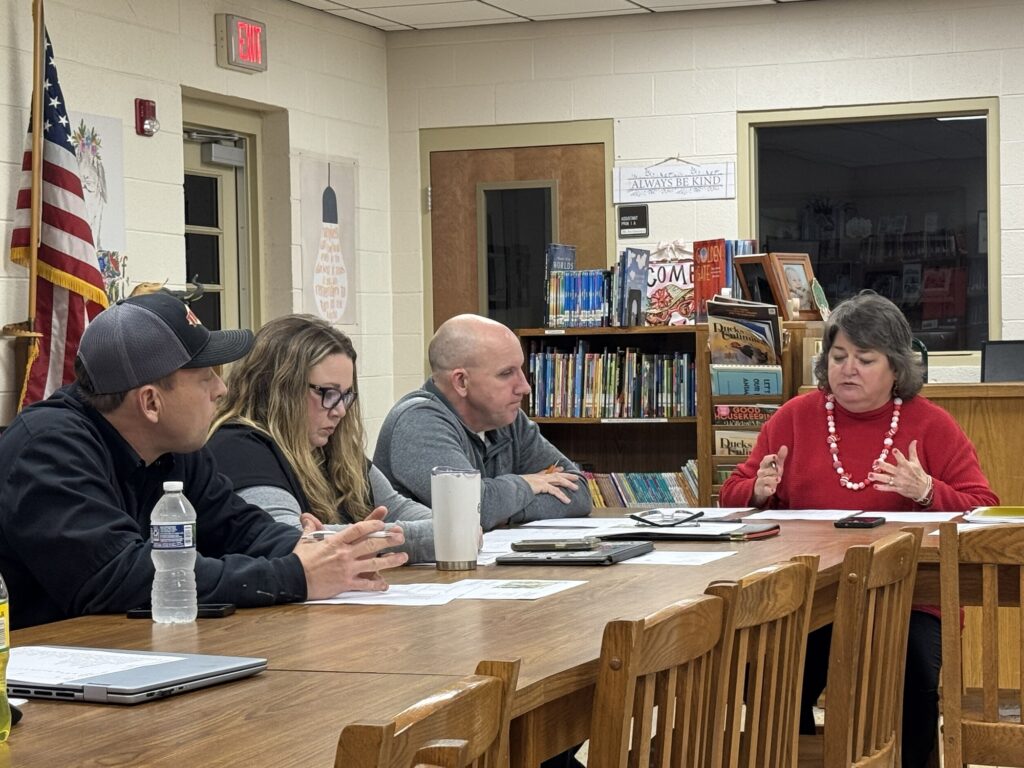
“The bill is targeted toward us,” she said. “It’s written for Carroll County, for one school who has virtual programs, and that’s us.”
She said the situation ultimately stems from a flaw in the original legislation rather than bad intent from anyone involved.
“It’s a situation that the legislature didn’t think out,” she said. “It’s a loophole, and they’re trying to figure out how to get out of it.”
South Carroll had already been making difficult financial decisions before launching the virtual school. Norris said they cut eight positions last year to balance their budget and avoid raising taxes.
“That’s the reason we had to do something pretty quickly,” she said, referring to exploring alternatives like adding the virtual program.
Dr. Norris told her board that she proposed an alternative solution to the current bills.
Rather than simply excluding out-of-county virtual students from the local funding formula, she suggested having the Tennessee Department of Revenue collect sales tax from students’ home counties and distribute it to South Carroll based on where virtual students actually reside.
“What I proposed was let the money follow the child, just like it has since the Ned McWhorter administration,” Dr. Norris told the South Carroll board at their February 18 meeting. “The Tennessee Department of Revenue collects all sales tax for the state of Tennessee. I’ve suggested that we invoice the commissioner of the Tennessee Department of Revenue on May the 30th annually, and by June 30, he provides payment to us for sales tax for those students from their home counties.”
Under this proposal, if South Carroll educates a virtual student from Knox County, for example, Knox County’s sales tax revenue would help fund that education.
The South Carroll school board voted at their February 18 meeting to support drafting a resolution endorsing this proposal.
Dr. Norris has maintained communication with Representative Martin throughout the process.
“Representative Martin has been very responsive to me,” she told her board. “I want y’all to know that he is trying his best to be supportive.”
Negotiations and Compromise
The directors have been meeting regularly to discuss the issue, and some compromises have already emerged.
The legislation originally specified counting only students whose primary legal residence is in Carroll County. This might create problems for all the districts.
Dr. Kee pointed out that most Carroll County districts educate students from neighboring counties. South Carroll has approximately 39 students from Henderson County who physically attend Clarksburg school. West Carroll has students from Gibson County. McKenzie serves students from Weakley and Henry counties. Hollow Rock-Bruceton has students from Benton County.
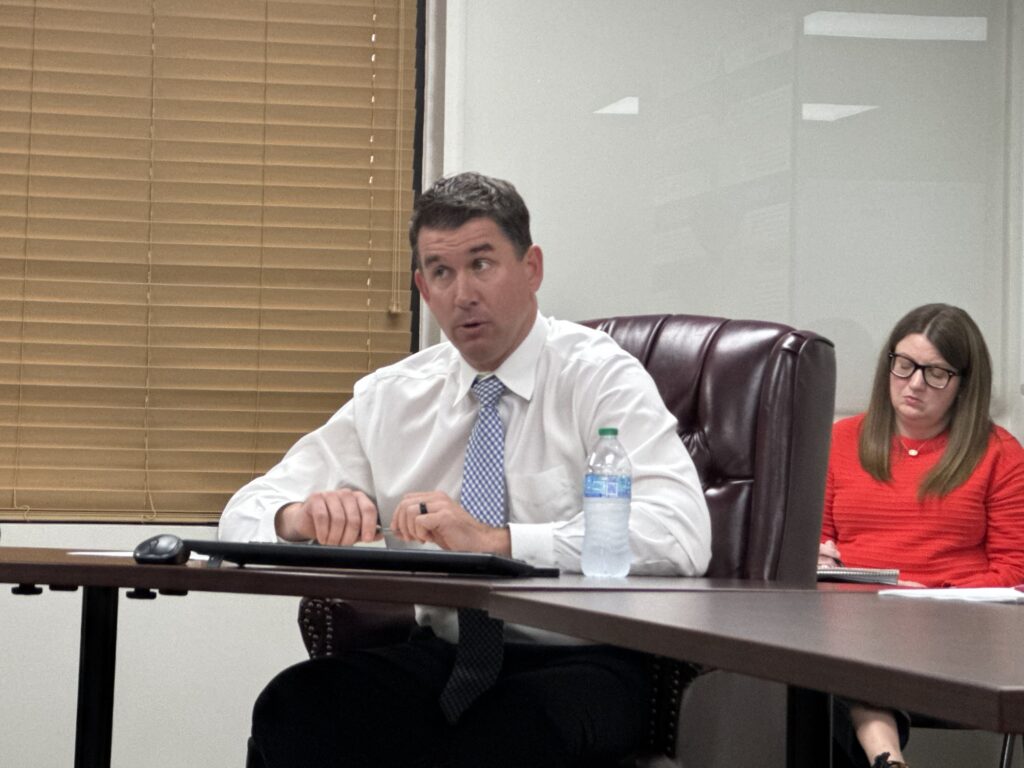
Dr. Kee proposed a modification that would count all of the students who attend in person, regardless of where they live. This idea protects all districts’ ability to count brick-and-mortar students from outside Carroll County while excluding South Carroll’s virtual students from the local sales tax distribution.
Dr. Kee also proposed that South Carroll’s virtual students not be counted toward the district’s portion of the contract with Carroll County Schools for transportation, tech center, and alternative school services.
“If we lose sales tax, you don’t want to turn around and charge us on transportation too,” she explained, regarding the concern about paying for services that virtual students don’t use.
Clarksburg currently pays Carroll County Schools approximately $168,000 based on 409 students.
Dr. Norris said that as their adult high school grows, “we could be the largest school in the county, and we could end up being paying a lot for transportation that nobody’s even using.”
No Hard Feelings
Despite the financial stakes, directors emphasized this isn’t a conflict between districts.
“We’ve had really good conversations with everyone,” Dr. Kee said. “Senator Stevens and Representative Martin are very engaged on this issue. We may be rivals in a lot of ways in Carroll County with these school districts, but in a lot of ways, I want [everyone] doing well, because these are Carroll County students.”
Dr. Barden of McKenzie echoed that sentiment. “We’ve been sharing information and I certainly don’t think it was anything they even saw coming,” he said. “We don’t blame it on [South Carroll]. It’s not their fault, but we do feel like there needs to be some rectification in it.”
Looking Forward
As the bills move through the legislature, the question remains whether lawmakers will adopt excluding out-of-county virtual students from local funding, or consider South Carroll’s proposal of having the Department of Revenue collect from students’ home counties.
Lawmakers are still refining the bill’s language.
For the directors of Carroll County’s other special school districts, the stakes are high. With the state mandating increased teacher salaries while TISA base funding struggles to keep pace, losing more than $100,000 each in local revenue would mean cutting positions or services.
“When you’re talking about that much money, and I go back to, if their virtual increases, it could become even more than that,” Dr. Barden said. “That’s where I think, for all of our districts, it was worth us trying to make a resolution in it.”
The bills face a tight timeline. Dr. Norris mentioned that if legislation wasn’t filed soon, “they wouldn’t have gotten it in this year.” With the effective date of July 1, 2026, Carroll County’s school leaders and legislators have just a few months to find a solution that works for all six districts.
“We’re not here blaming South Carroll for this,” Dr. Kee emphasized. “I don’t really believe this was their intent when they were doing this. But it does concern me, especially with non-Carroll County students that are virtual, that they would be taking sales tax dollars from students who are in a brick and mortar school in Carroll County. That’s concerning to me, and I think it would be a concern to taxpayers in Carroll County.”
