

Brooke Cary lies in a hospital bed, unable to walk, struggling to swallow, waking at times not breathing.
Doctors have run every scan available and sent her home twice. Nobody has an answer.
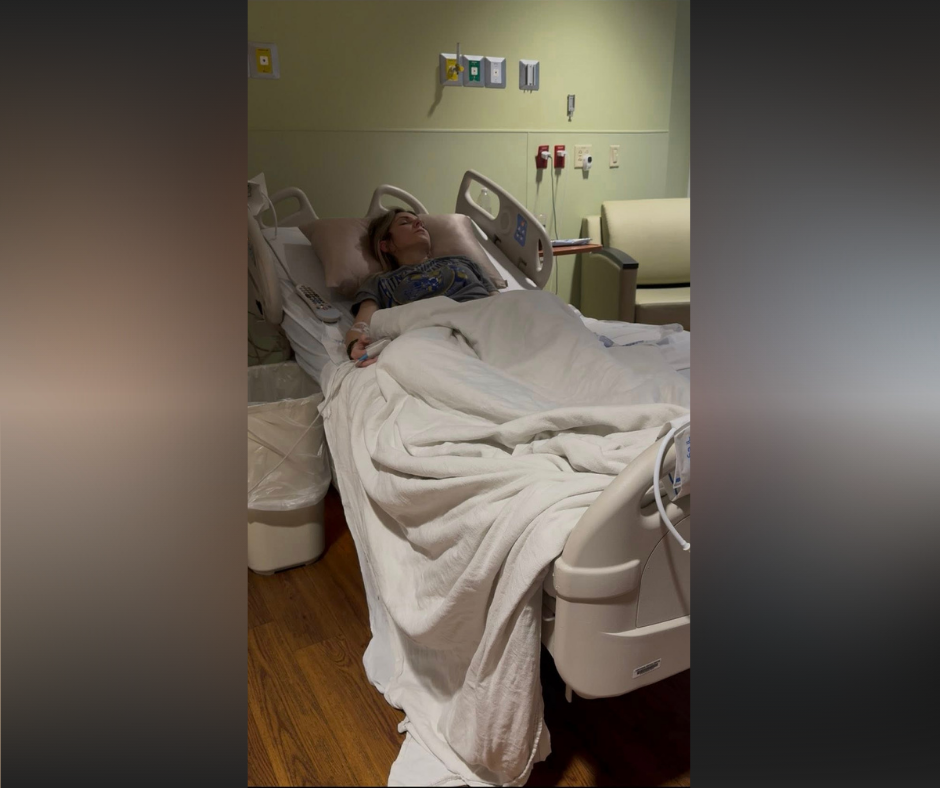
But three weeks ago, the Huntingdon resident’s biggest concern was which day she’d scheduled her Botox appointment.
The Night Everything Changed.
According to a post Cary made on social media, at 1:30 p.m. on March 3, she received 45 units of Botox injected into her forehead and crow’s feet. It’s the same treatment and dose she had received before. By 10:15 that evening she was lying in bed when, she says, the numbness began.
“My face goes numb, followed by my neck, chest, arms, legs,” she wrote. “I try to get up and wake my fiancé and almost collapsed and am unable to talk or walk. Vision problems and slurred speech. Can’t swallow and am having difficulty breathing.”
She was rushed to an emergency room, where staff treated her as a stroke patient. CT scans came back clear. She was given Benadryl, which she says made things worse, and sent home with the same symptoms she arrived with.
Multiple Hospitals, No Answers.
A second ER in Jackson admitted her for multiple days. MRI scans were clear. Doctors told her the symptoms were probably stress and recommended a psychotherapist.
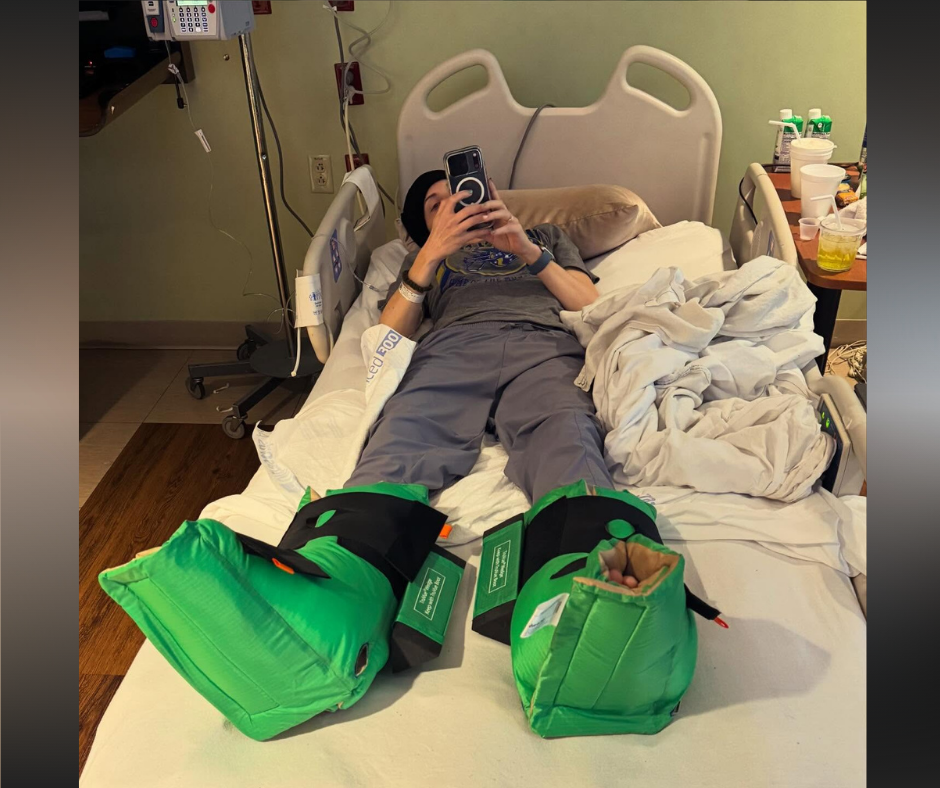
“I was sent home with a prescription of Gabapentin, which just about killed me,” she wrote. “Uncontrollable tremors for hours. Couldn’t hold my arms and legs up. Dissociating. Same symptoms all magnified.”
At a third facility, she said a muscle relaxer triggered a 45-minute seizure. Another 400mg dose of Gabapentin caused 14 hours of continuous tremoring.
“Doctors and the medical team there treated me horribly and would not listen about the Botox injections,” Cary wrote. “Tested me for everything else. Lumbar puncture, you name it. All clear.”
It was only after her family pushed back hard that anything changed. “We had to do all the research and present it to them,” she wrote. They brought medical literature to the doctors themselves, showing that drugs including Gabapentin, muscle relaxers and antihistamines can worsen a botulinum toxin reaction by causing the toxin to cling more tightly to nerve proteins. “Only then did the doctors start listening. Only then after presenting them with research docs did they finally start accepting this was caused from Botox.”
Three rounds of steroid infusions followed. They did not help. She was discharged again. “There’s nothing they could do and no treatment,” she wrote. “This has been a BATTLE.”
What Research Says.
Botulinum toxin injections, sold under brand names including Botox, are among the most commonly performed cosmetic procedures in the world.
Serious adverse reactions are considered rare by manufacturers and regulators.
Cary’s experience is not without medical basis.
A peer-reviewed paper published in the journal Advances in Dermatology and Allergology, hosted by the US National Institutes of Health, confirms that botulism-like reactions are a documented complication of cosmetic Botox use.
The paper notes that systemic spread of the toxin can cause a wide spectrum of symptoms including muscle weakness, difficulty swallowing, slurred speech and respiratory failure.
One finding in the paper is particularly relevant to Cary’s case. It said reactions can emerge without warning even in long-term patients.
“Toxic effects of botulinum toxin can appear at the 10th or 11th injection, after prior uncomplicated injections,” the authors wrote.
Symptoms can appear anywhere from the same day as treatment to 36 days later, most commonly between the second and sixth day.
The paper also confirms what Cary’s family had to fight to get doctors to accept, that certain medications make the situation worse, not better.
The authors wrote that drugs including muscle relaxants, anticholinergics and aminoglycosides “may potentiate botulinum toxin effects.”
Figures on official reporting are telling. The FDA recorded just 36 serious adverse events from cosmetic Botox across all of 2005. Cary believes the real number is far higher, and that under-reporting is a systemic problem.
“There’s hardly any reports of these cases because hospitals will not report it,” she wrote.
Independent research supports that concern.
A 2022 meta-analysis covering 4,000 injection sessions found a 16% overall complication rate, and the researchers themselves noted that inconsistent reporting standards likely mean the real picture is worse than official data suggests.
Still No Answers.
Weeks after the injections, Cary’s daily life remains severely restricted.
“I still can’t walk without assistance and a walker,” she wrote. “I can’t get off my back for longer than 10 mins because my neck and head are killing me. I’m still experiencing dissociating episodes where I wake up and I’m not breathing. My vision is still off, my speech still slurred at times.”
“I’m supposed to get married in two months and I’m not sure if I will even be able to walk down the aisle or even be physically able to go,” she added. “So many times throughout this I wasn’t sure if I was going to make it or not. But hey, I was told scans are okay so I’m okay.”
A Warning.
Cary said she wants her story to be a warning for others.
“I just don’t want anyone else going through this,” she wrote.
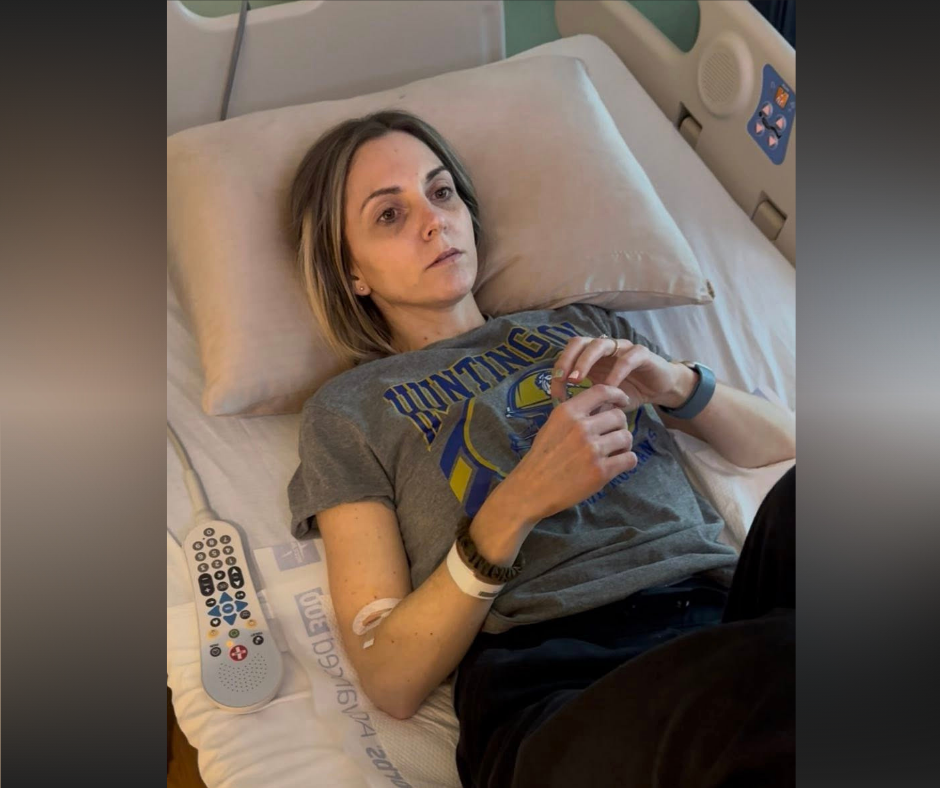
She explained that the healthcare system has little to no protocol for these cases, no diagnostic tools to confirm the cause and no treatment to offer once a reaction has set in.
“If you google these symptoms it tells you to get immediate emergency care and call your state health department,” she wrote. “I can promise you when you do that there is NO ONE to help you. They don’t have any type of blood tests to test it . . . They will only run their structural scans and when those come back clear they are done with you.”
“There are thousands of women out there just like me that have been dismissed and sent home with no help,” she added. “Society literally has made us inject toxins into our faces just to keep up an image of youth. How far will we go?”
“Botox is not safe,” Cary wrote. “And I’m going to do everything in my power to advocate against Botox injections and spread awareness.”
“Please, ladies, cherish your life more than you hate your wrinkles.”
Brooke Cary shared her account publicly to raise awareness. Anyone experiencing a medical emergency should call 911 immediately.

Botox can have side effects just like anything else can. One is warned in the literature. You are also given guidelines before and after to follow. I’d be more concerned over the fact doctors and hospitals failed to follow protocol for Botox therefore increasing the side effects and possibly prolonging the damage. I understand her being upset and frightened but Botox is used for other things besides wrinkles.
The Botox Dysport Side Effects group on Facebook has over 40k people suffering with botulism illness after using Botox. Myself included. I am 6 years past treatment and still have side effects every day. People don’t know until they know.