

TREZEVANT, Tenn. — One resident left Trezevant’s meeting fuming in the middle of his address to the board last Tuesday.
John Quinn, in his second meeting in a row, came armed with a copy of the town’s 2007 zoning ordinance and two complaints. His first grievance was about a proposed land use application he said creates unnecessary bureaucracy, and the other was about home occupation businesses he says the town has refused to hold to the same standard it once held him to.

Alderman Dan Dieringer brought forward a land use application he has been developing for several months. It’s a one-page form he described as the first step toward formalizing how the town tracks new construction, renovations, and business startups.
“This is all it does,” Dieringer said. “It starts the process. It has a paper trail that Mr. [Jim] Seaton can have, and we have it on file at City Hall.”

The document asks for a name, address, phone number, a description of the proposed project, and a signature. A $50 fee would go toward paying the town’s codes inspector, Jim Seaton, for his time.
Dieringer was careful to distinguish it from a permit.
“Permits are something totally different,” he said. “This document does not address that. All this addresses is the simple legality of the proposal.”
Resident Philip Colwell weighed in on the fee structure before the vote, arguing that it created an uneven playing field between town residents and outside vendors who set up at the local flea market under a $20 county permit.
“It’s not fair for one business to have to pay one thing and somebody come from out of town and pay less,” Colwell said. “That’s a slap in the taxpayer’s face.”
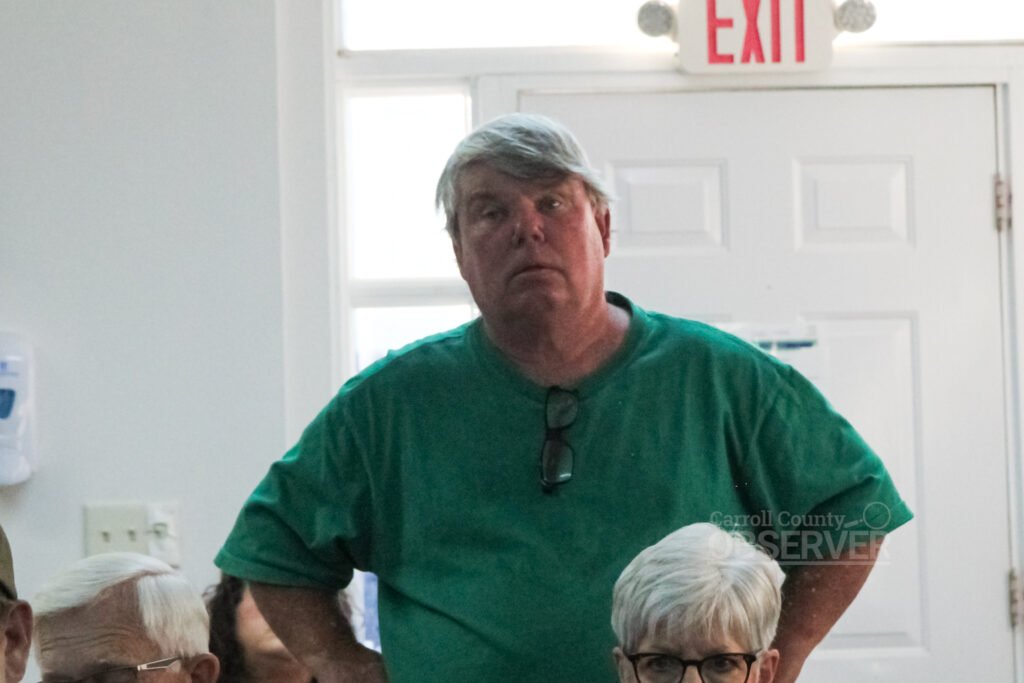
He pointed to food trucks and other vendors that pull up to the flea market as examples.
“They’re driving better cars than you and me,” he said. “People that live in Trezevant pay taxes. You let them come in and take the people’s money and they pay less.”
Dieringer acknowledged the concern but said it was a separate matter from what the board was voting on.
Dieringer added that the flea market permit and the land use application serve different purposes, saying one covers temporary weekend vendors, the other covers stationary businesses operating within the town.
Colwell also questioned why the application and the permit process weren’t being addressed simultaneously rather than in stages, and whether there would be any consequences for someone who skipped the application entirely.
Dieringer said fines exist within the current ordinances, but that the full permit process would be addressed at a future meeting.
Before the board could vote, Quinn asked to be heard. He had put himself on the agenda specifically because of the application, and he wanted to speak before any vote was taken.
Quinn told the board that the proposed land use application was unnecessary for many of the things it would cover.
He held up a copy of the town’s own 2007 zoning ordinance.
“There is nothing in those rules whatsoever that says you need a permit at all,” Quinn said. “So if you don’t need a permit, why do I have to come down to City Hall, fill out an application for something that doesn’t need a permit, and tell you what I’m going to do on my personal property?”
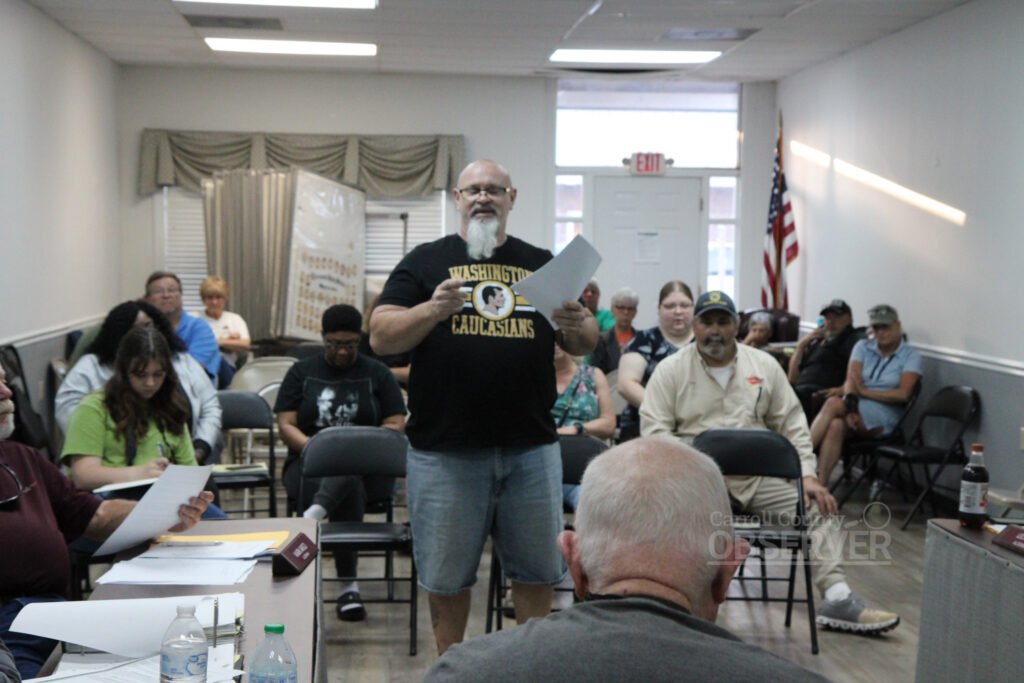
He drew a distinction between projects that legally require permits and those that don’t, and said the $50 fee amounted to charging residents for something the existing ordinance already allows them to do freely.
“Stop making bureaucracy,” he said. “Stop trying to steal money out of our pockets.”
The town’s codes inspector, Jim Seaton, said the application is only the first step, that no fee is actually owed until the ordinance tying everything together is passed, and that the process is being built.
“You don’t owe me $50 for anything yet,” Seaton said.
Quinn wasn’t entirely satisfied, but moved on.
Home Occupation
Quinn then turned to the complaint he had first raised in April, which was the town has failed to enforce its home occupation rules equally.
He said he had gone through the Board of Zoning Appeals, obtained the proper permits, and secured a sales tax license after the town came after him. A year later, he said, nothing had been done about the other home occupation businesses operating in town without doing the same.
“I’m complaining now for a second time,” Quinn said. “I would like to see the other home occupations up to the exact same standard I am.”
He said he knew of at least four, and suspected as many as ten.
“You don’t even have to do it the way you did it to me,” he said. “Go to the board of appeals, ask for your permitting process, get your sales tax license. It doesn’t have to be that hard.”
Mayor Bobby Blaylock acknowledged the town had been slow to modernize its approach to business regulation.
“Twenty years ago, when the state wanted us to start doing some of this, we didn’t really want to do it,” Blaylock said. “We never did get around to it. That’s why we’re not doing it now.”
“You went after me for having a home occupation,” Quinn replied. “What’s that got to do with 20 years ago?”
Quinn then raised a question about whether the Parks and Recreation board should be formally constituted, noting that an alderman was currently filling a role that a separate board is supposed to handle
He questioned whether that was legal given that an alderman had previously been barred from serving on the Industrial Development Board for the same reason.
Alderman Don Barger said the Parks and Recreation Board is not under the same regulations with the Comptroller’s office as the Industrial Development Board.
By the end of his time, Quinn had run out of patience, and walked out.
“We need to vote everybody out,” he said on his way out to the door. “That’s exactly what I’m hearing. We’re a town of 600 people and y’all play these games.”
He told the board he wanted his name removed from consideration for the Industrial Development Board.
The board voted to approve the land use application after Quinn left.
