

CARROLL COUNTY, Tenn. — Drugs, deputy retention, body cameras and jail operations were among the topics put to the three men seeking to become Carroll County’s next sheriff.
Candidates squared off Tuesday night, June 9, on the Mike Weatherford Show, broadcast out of Paris.
Michael Smith, Ryan White and Eric Sawyers spent more than an hour fielding questions from Weatherford and co-moderator Hansel McAdams, a former Henry County General Sessions Judge.
The forum offered voters a first extended look at where the candidates stand ahead of the August 6 election.
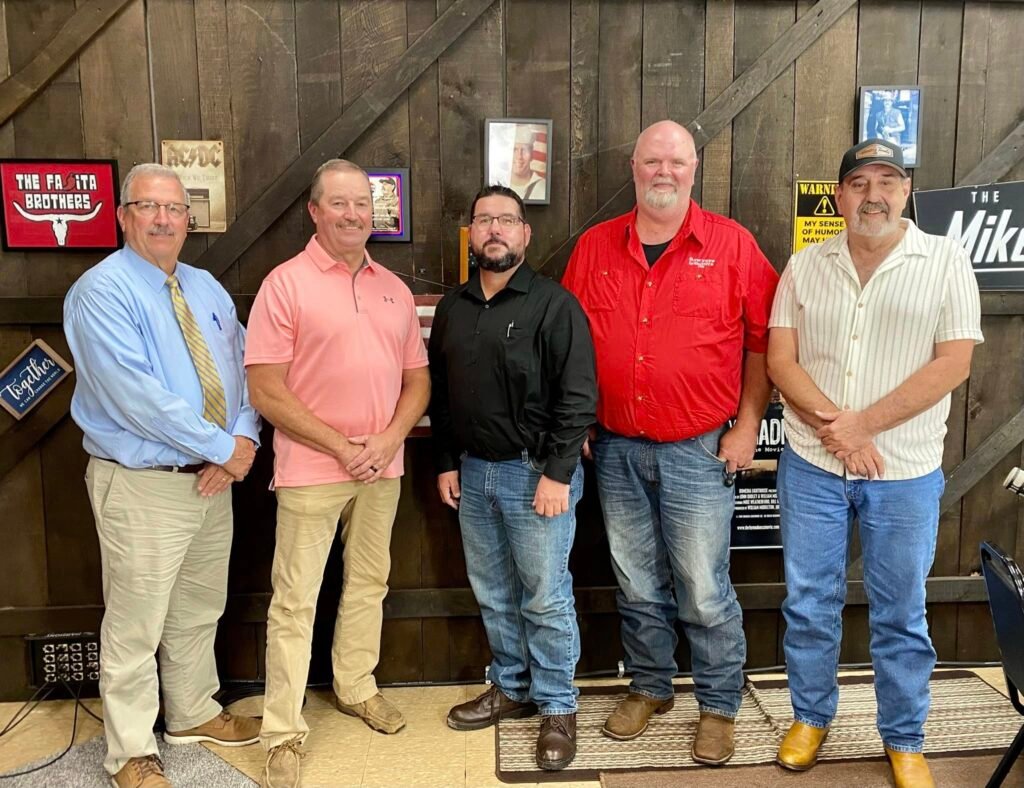
Table of Contents
Candidates
Drugs
Zone Patrol
Body Cameras and Flock
ICE
Staffing and Pay
Budget
Jail
Second Chances
Public Accessibility
What’s Next?
Watch The Full Show
The Candidates
Michael Smith has spent 15 years at the Carroll County Sheriff’s Department, where he currently holds the rank of sergeant. Before that he worked three years in Benton County and also served several terms as alderman and vice mayor of Hollow Rock. He also operates a roofing and construction business.
Ryan White brings 25 years in law enforcement, starting as a reserve deputy at the Carroll County Sheriff’s Department before moving to McKenzie, where he has served as chief of police for nearly four years. During that time he grew the department from 17 to 22 officers.
Eric Sawyers is a fifth-generation Carroll Countian who began his law enforcement career at 19 as a reserve deputy with the Carroll County Sheriff’s Office and was hired full time at 23. Over 25 years he has worked as a patrol deputy, shift sergeant, firearms instructor, evidence custodian and currently as a criminal investigator.
Drugs: Agreement on the Problem, Some Difference on the Solution
All three candidates named drugs as the most pressing challenge facing the department, but their approaches diverged in the details.
Sawyers said he would dedicate a deputy strictly to Carroll County drug enforcement, arguing that the two investigators currently assigned to the drug task force too often get pulled away to work outside the county.
White agreed another investigator was needed and pointed to his own department’s two full-time narcotics investigators in McKenzie as a model. He also raised the importance of ongoing training, noting that narcotics work is “constantly moving, constantly evolving.” White added that he wants to implement zoning, business checks and increased visibility as complementary tools.
Smith echoed the call for more drug investigators and added prevention to the conversation, citing the DARE program and school-based outreach as ways to address what all three acknowledged is a generational problem.
“I really believe there is no family out there that’s not affected by drugs in one way or the other,” Smith said.
McAdams raised the question of whether Carroll County’s agencies — the sheriff’s department and the municipal departments in Huntingdon, McKenzie and Bruceton — had ever formed a joint drug task force focused exclusively on the county.
All three candidates said they would support that kind of cooperation.
Zone Patrol: The Sharpest Contrast of the Night
The clearest disagreement of the forum came on the question of zone-based patrol coverage.
White said he favors dividing Carroll County’s roughly 600 square miles into three zones, citing Henry County’s model as evidence it works. He said Henry County averages 10 to 13 minutes on non-emergency calls and seven to ten minutes on emergencies within zones, compared to the 30-plus minutes it can currently take to cross Carroll County.
Sawyers pushed back, and explained that on a typical shift, the department runs three to five patrol deputies. That number shrinks further when someone is in training, on vacation or out sick. Breaking into more than two zones, he said, would almost certainly require hiring additional deputies, which carries significant cost.
Smith largely agreed with Sawyers.
“In a perfect world it would work, but first time you get a domestic call, most time everybody’s going,” he said.
White acknowledged the staffing constraints but argued that even with everyone responding to a serious call, the zone system cuts down on initial response time before backup arrives.
Body Cameras and Flock Cameras
Carroll County’s patrol deputies currently operate without body cameras, though in-car cameras have been in use for years.
All three candidates said they support adding body cameras.
White described the system used in McKenzie. He said they use cameras that cost roughly $525 each with minimal annual storage costs. He noted that a state grant called the SRT grant can cover half the purchase price, and said 30 cameras for the department would run approximately $15,750 before the grant.
“It’s relatively inexpensive,” he said.
On flock cameras — automated license plate readers used by agencies across the region — all three expressed support, with Sawyers adding a note of caution.
“They are a great tool when they’re not abused,” he said, acknowledging public concern about government overreach. He added that he has already used other agencies’ flock camera networks to solve crimes as an investigator.
Working With ICE
All three candidates said they would cooperate with U.S. Immigration and Customs Enforcement when encounters arise in the course of their duties. Each framed it as a matter of enforcing existing laws.
White explained that his department has worked with ICE recently in McKenzie. He said if a stop produces someone without a license or documentation, his approach would be to contact ICE and follow their guidance.
Sawyers said the same standard applies, that if someone is pulled over without a driver’s license, they are breaking the law regardless of immigration status and would be taken to jail. He drew a distinction between responding to encounters and conducting sweeps.
“We don’t have the resources to go out here and just go door to door rounding up people,” he said, noting that targeted immigration enforcement is ICE’s jurisdiction, not the sheriff’s.
Smith told of a recent example, describing a call that led to deputies arresting several subjects, after which the Carroll County jail contacted ICE, who took them into custody.
None of the three expressed hesitation about cooperating with federal authorities.
Staffing and Pay
The issue of deputies working second jobs, including part-time shifts at other agencies, came up as a situation unique to Carroll County law enforcement.
Sawyers and Smith both acknowledged it happens and said it is partly a function of pay.
Sawyers said he works with farmers part time outside of his job at the Sheriff’s Office.
Smith operates a roofing business on the side.
White said he had worked three jobs himself earlier in his career.
All three said building morale and a positive work environment was the primary tool for retention.
White pointed to McKenzie’s fully staffed department as evidence the approach works. He said he conducts an annual pay scale study and presents it to the city to advocate for raises.
The question of competing with the state for deputies was another topic discussed.
The Tennessee Highway Patrol regularly recruits from county departments.
All three said pay alone may not win that battle, but a good work environment, quality training and being valued can make a difference.
Smith noted he currently has two former troopers on his shift.
Budget and Grants
White explained that he has managed the McKenzie Police Department budget for four years, attended a 200-hour executive leadership program that covered budgeting, and oversees an administrative sergeant whose primary role includes writing grants. He said that position has paid for most of the department’s new vehicles.
Sawyers said he has not been directly involved in the county budget in his current role but committed to cutting wasteful spending and making every dollar count. He noted the department’s total budget is approximately $7.5 million, with roughly half going to jail operations.
Smith acknowledged limited budget experience outside his time as a Hollow Rock alderman, but said he is familiar with moving money around to meet needs.
All three said they would work cooperatively with county commissioners on budget matters, and all three acknowledged the county’s grant writing office as a resource.
White was the only one to specifically propose hiring a dedicated grants and administrative position within the sheriff’s department itself.
Jail Operations
Carroll County recently achieved Tier 1 jail certification, raising the daily rate for housing state inmates to $44.
Sawyers said the county brought in nearly $700,000 from the state last year housing between 40 and 50 state inmates, and noted that the cost of housing those inmates is well below the reimbursement rate, making it a net positive for the county budget.
Both White and Sawyers acknowledged the jail is an area where they would have a learning curve if elected, having spent their careers on the patrol and investigative side.
Smith worked in a jail early in his career in Benton County.
All three agreed that rising medical costs for inmates represent one of the most difficult budget variables for jail management.
Second Chances and Rehabilitation
White said he wants to implement a Second Chance program and work release program modeled after Henry County, which he said has significantly reduced recidivism. He noted that the Tennessee Correction Institute offers grants to help fund such programs.
Smith also expressed interest in a work release program and mentioned the value of programs for vulnerable populations, including building a registry in the department’s CAD system for residents with autism or dementia to help deputies respond more effectively to related calls.
Sawyers proposed a sheriff’s office summer youth camp as a way to build relationships between young people and law enforcement, as well as free church security assessments and CPR and first aid training for the county’s more than 100 churches.
Public Accessibility
All three candidates said they would make themselves accessible to citizens who call or reach out with concerns.
White pointed to his current practice of returning every call as chief.
Sawyers said he would go further, holding regular community meetings across Carroll County’s various communities to hear concerns in person.
“If I don’t go to them, they don’t have that communication. I don’t know their concerns or their complaints. I can’t fix it,” Sawyers said.
What Comes Next
The Carroll County Observer, along with The McKenzie Banner, will host a second candidate forum, where questions will come directly from the public.
Residents will be able to submit questions online, which will be reviewed and filtered by former Circuit Court Judge Donald Parish.
The question form can be found here.
The Sheriff Forum will take place on Tuesday, June 30 at the Carroll County Civic Center, beginning at 6 p.m.
The Carroll County Sheriff’s election is August 6.
