
The Carroll County Commission approved a new payroll structure for county employees at their meeting Monday night, April 13, but not before a lengthy discussion about what the transition could mean for workers during the month of July.
Resolution 4-07-2026, which transitions the county to a semi-monthly, pay-for-days-worked structure effective July 1, passed without a single no vote. The policy ends the practice of paying employees in advance of hours worked during certain pay periods, and standardizes how holiday pay is handled across all county departments.
The biggest concern for many employees is the one-time gap in pay that will occur in July, when the structure takes affect. Employees won’t receive their first check for the month until July 24.
The Transition Gap
During discussion, Commissioner Daniel Thomas expressed that the concern is more than just employees going three weeks without a check.
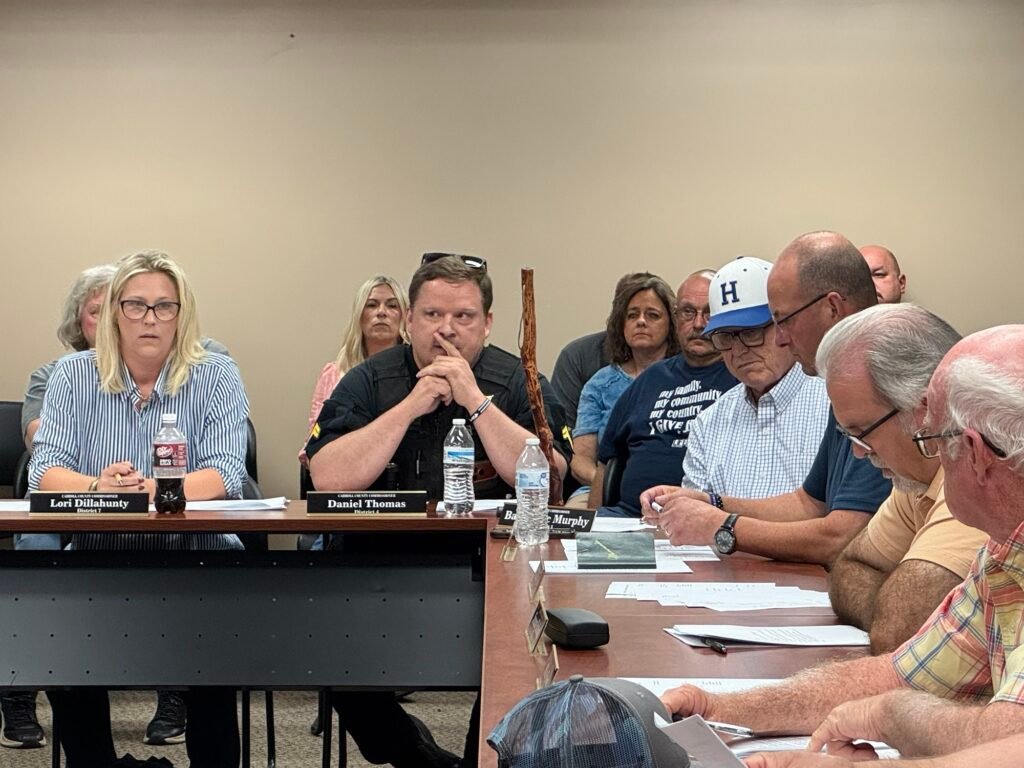
Because the transition creates only one paycheck for the month, all monthly deductions, including insurance, retirement, and other benefits will come out of that single check.
For some employees, insurance alone runs $749 per pay period, meaning nearly $1,500 in insurance deductions could hit all at once.
“There’s a big difference between talking about a gap and talking about your entire check,” Thomas said.
Commissioner Barry Murphy asked whether the policy would hold employees harmless.
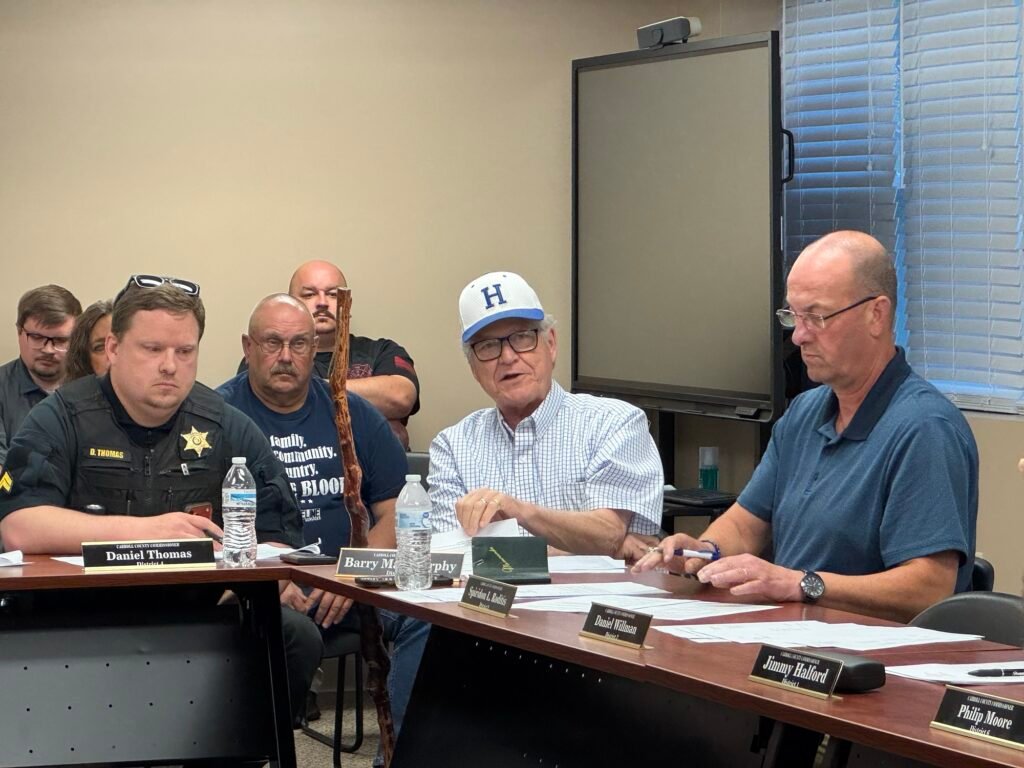
“Our county employees are our most valuable asset, and I could not go along with a policy that is going to harm them in some way,” Murphy said. “Does this policy do that?”
“I can’t say that anybody would be harmed financially — it’s more of an inconvenience,” County Mayor Joseph Butler replied. “We’re very mindful of the impact of a delay in that first pay period, but it’s more an inconvenience.”
Murphy was not fully satisfied with that answer.
“I’m sensing that it’s not harmless,” he said. “I just want to make sure that they get the money they’ve been accustomed to getting. I went through the very same thing working with the comptroller’s office, and when we changed our pay period, our comptroller went to the General Assembly and they made sure employees were taken care of. I would have a hard time going along with any policy that’s going to harm our employees.”
Murphy then raised what County Trustee Paula Bolen had mentioned to the Finance Committee.
“This county has got enough money,” Murphy said. “If there is a way, we can do a one-time payment for these employees. A lot of people live paycheck to paycheck. That’s just life. An employee is expecting money they’re not going to get, and they’re not going to get what they’ve been accustomed to getting. We need to address that.”
“That’s been part of the discussion in committee about bridging that gap,” replied Mayor Butler. “I’m open to it. I think tonight it’s more of a commitment to that in light of this policy. But I’m open to it.”
Commissioner Darrell Ridgely acknowledged the transition gap concern but stopped short of committing to a specific dollar figure for transition assistance.
“I’m reluctant to throw a number and say we’re going to be willing to do this,” Ridgely said. “I’d like to know what all the expenses are going to be for the whole county before we commit to that. We will try to make a concerted effort to be as fair with the employees as we possibly can.”
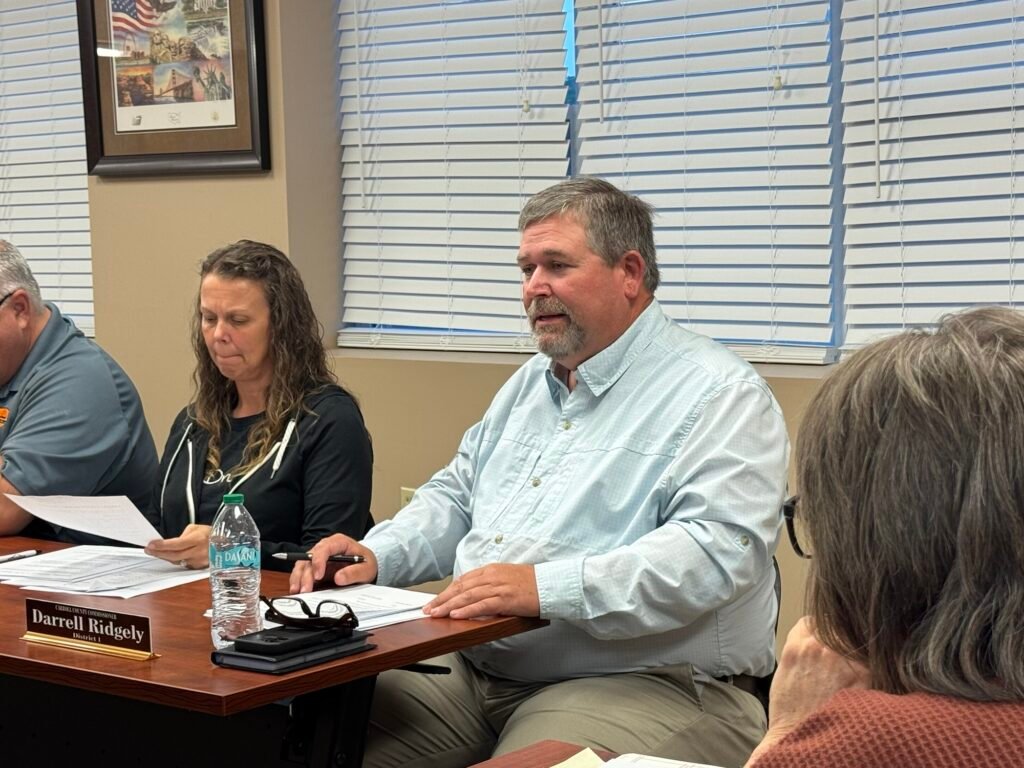
Ridgely added that the notice window built into the timeline is intentional. During the meeting, Butler and Ridgely said the required notice was 45 days. During initial discussions back in March, they said it was 90 days.
“That’s why we’re doing it now, not waiting for June,” Ridgely said, referring to a 45-day notice.
He also pushed back on the idea that the change will have a long-term negative impact for employees.
“We’re not taking any money away from any employees,” Ridgely said. “We’re going to pay them for exactly what they’re worth. Our intent is not to harm the employees in any way. Our intent is to protect the taxpayer.”
He said he believed the county would ultimately find a way to ease the transition.
“I think we’ll make it palatable,” he said. “We better make it palatable.”
The Sheriff’s Concern
Sheriff Andy Dickson used the discussion to raise a concern specific to his department.
Of the county’s roughly 212 employees, 77 work for the sheriff’s office and unlike most county departments, they are never off on holidays.
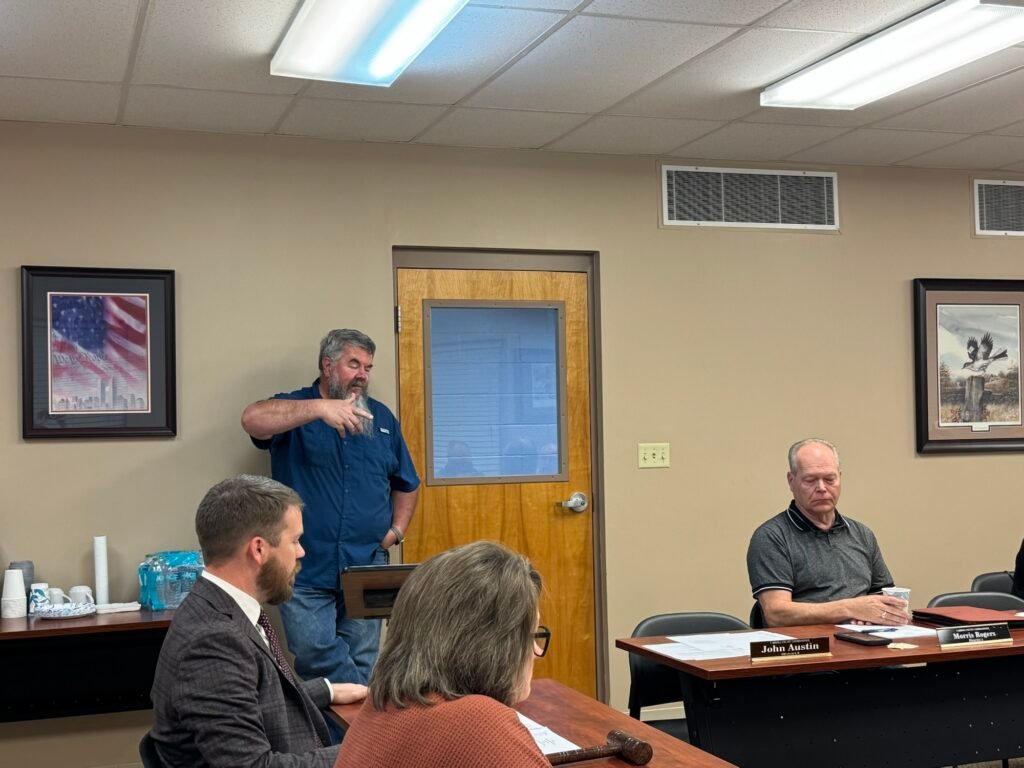
“Those 77 employees are not allowed to stay home on holidays,” Dickson said.
He explained that the new requirement to pay holiday pay in the period it occurs could create scheduling and budget complications for his department.
Dickson said that under the current system, his employees have been able to bank holidays and holiday pay and use them flexibly, essentially to take the time off when coverage allows rather than on the holiday itself. He also raised concerns for when a holiday falls on a Saturday and the county observes it on Friday. His employees who work Friday get the benefit of the holiday pay and the their wages for working, but those who work Saturday do not.
“That’s a unique situation since we’re never closed,” he said.
Ridgely framed the holiday banking issue as a matter of financial transparency and good government practice. He noted that while the county can pull a report at any time showing how much has been spent from any department’s line items, banked holiday hours don’t show up in those figures. He claimed that it makes the county’s true financial picture harder to read.
“You may have banked 1,000 hours over there, and we don’t have any way to know that,” Ridgely said to Sheriff Dickson. “When things are running reasonably tight, that’s a very misleading number. We want to give employees their money and let them take it and do what they want to do with it. That’s just good government practice, and the auditors agree.”
He also suggested that sheriff’s office employees who want to set aside holiday pay could do so on their own terms.
“I think any employee in the county can go to Leaders Credit Union and open up a savings account and they can benefit from that interest,” he said.
The Vote
Commissioner Murphy raised a procedural question before the vote. He said that several county employees sit on the commission and asked whether they should abstain.
Mayor Butler said the statute allows commissioners to vote on budget resolutions, including payroll policy, but added that those commissioners would need to abstain from any vote dealing with a transition bonus, if the commission were to take that up.
“They’re not voting on their pay, they’re voting on a policy and schedule,” Butler said. “I’m comfortable with them voting on this.”
The resolution passed with all commissioners voting yes, except for Commissioner Thomas and Commissioner Walter Smothers, who both passed on voting
TACN Radio Funding Also Approved
The commission also unanimously approved Resolution 4-01-2026, amending the general fund and drug fund budgets to fund the county’s share of the Tennessee Advanced Communications Network (TACN) radio system.
It was the second consecutive month the commission has approved funding adjustments for TACN radios. In March, they approved funding for the fire department to make a purchase.
“That’s two months in a row we’ve adjusted a lot of money towards a really important project that will serve our emergency services very well,” Mayor Butler said.
The TACN building is already on site and radios are in the building. A working group including EMA, fire, dispatch, Carroll 911, and the sheriff’s office is coordinating to finalize a go-live timeline.
Other Business
The commission approved the election of the following notaries: Bonnie Autry, Carlas Ballhagen, Gina G. Burton, Brad Hurley, and Sandi Roditis.
The commission also approved several additional budget resolutions covering circuit court, highway department, and grant fund amendments, all of which passed without discussion.
The next Carroll County Commission meeting is scheduled for Monday, May 11 at 7 p.m. at the Carroll County Office Complex, 625 High St. in Huntingdon.
