
“With the ropes of the past, we shall ring the bells of the future.” — Senior Class Motto, Hollow Rock-Bruceton Central High School, Class of 1947
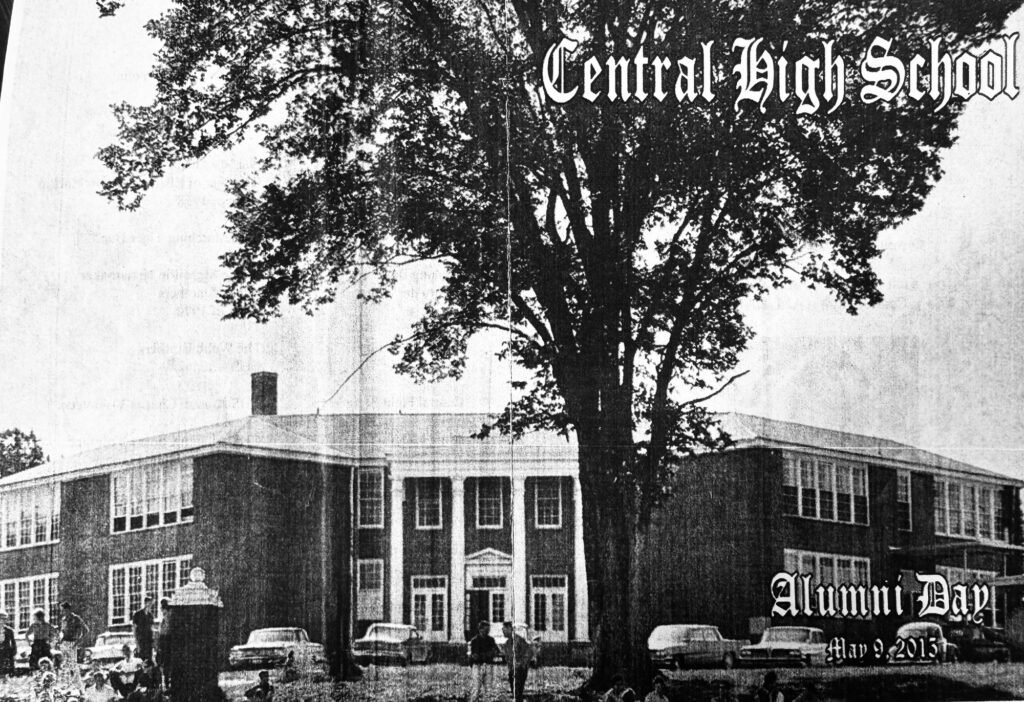
HUNTINGDON, Tenn. — When Anita Shaw Utley Hurt Boyd graduated from Hollow Rock-Bruceton Central High School in 1947, her senior class motto was a call to carry the past forward.
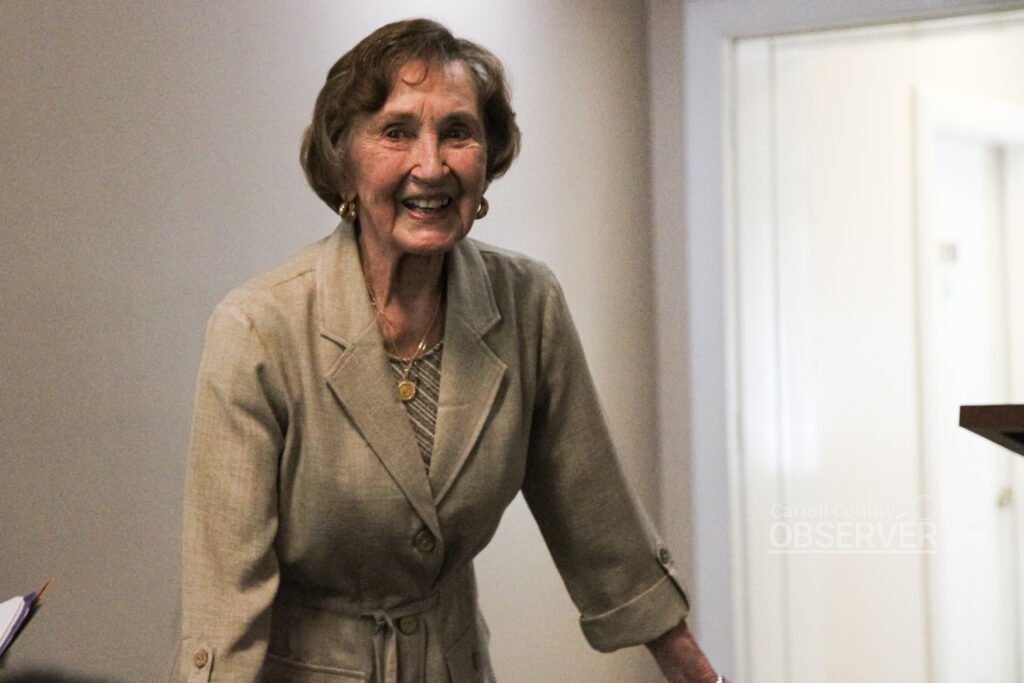
On Wednesday morning, April 15, Boyd did just that.
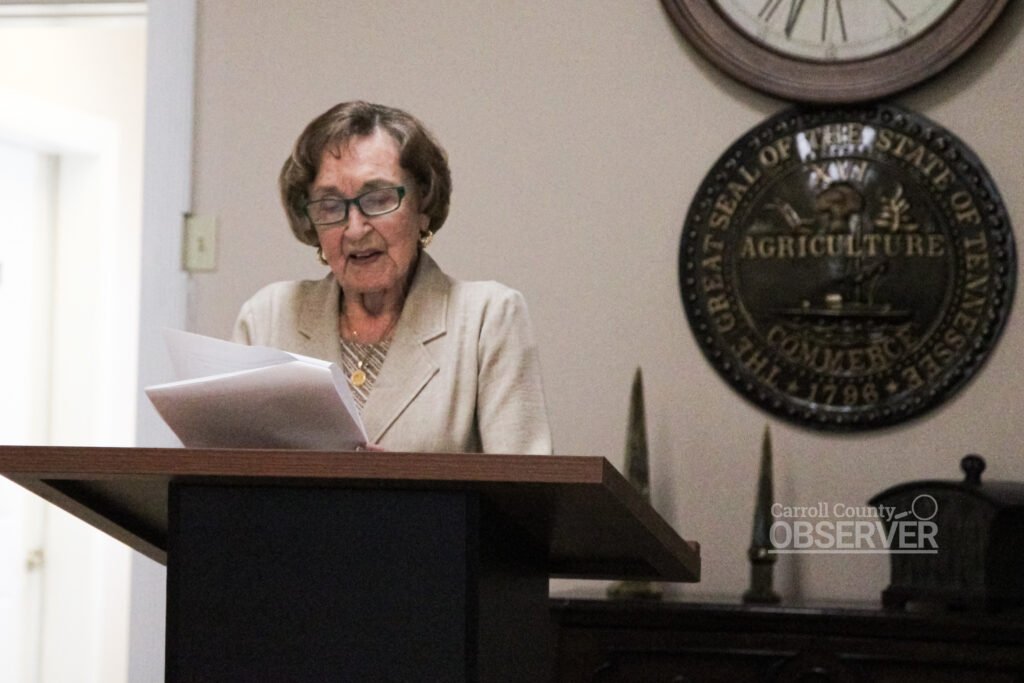
The 97-year-old Camden resident was the featured speaker at the Huntingdon Historical Society’s monthly meeting, where she spoke about Bruceton as it was during her years growing up there in the 1930s and 40s.
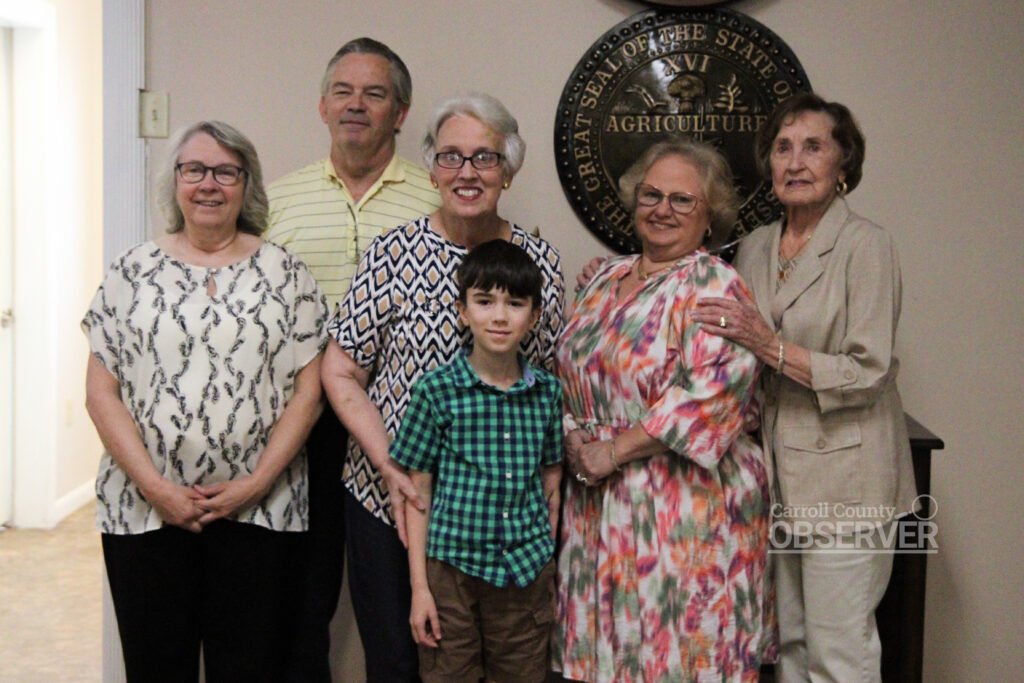
Her great-great-nephew, eight-year-old Samuel DeVille, was in the audience. Before beginning her remarks, Boyd said she hoped the moment would stay with him.
“I hope that he can understand what I’m going to say today, and can remember me,” she said, “because I’ve got a big tale to tell.”
Boyd didn’t disappoint.
Bruceton’s Golden Age.
“The railroad birthed Bruceton,” she said.
Boyd traced the town’s origins to the early 1900s, when a plot of land roughly halfway between Nashville and Memphis was selected to become the central hub of the N.C. and St. L. Railroad. Around 1920, the community was briefly called New One to accommodate a post office for the railroad. By 1922 it was called Junction City, and in 1925 it was incorporated and named Bruceton for W.P. Bruce, an executive on the railroad.
Her own family’s story was woven into that history. Her grandfather, Herschel “Crappie” Aden, moved from Huntingdon in 1906 to help lay the tracks and worked as a car repairman until his retirement in 1946.
Boyd painted a vivid picture of a bustling small town.
During the 30s and 40s, she said, Bruceton was home to a railroad hotel, the Ritz Theater, a bank, two doctors, five churches, a telephone office, a lumber shed and a large ice plant.
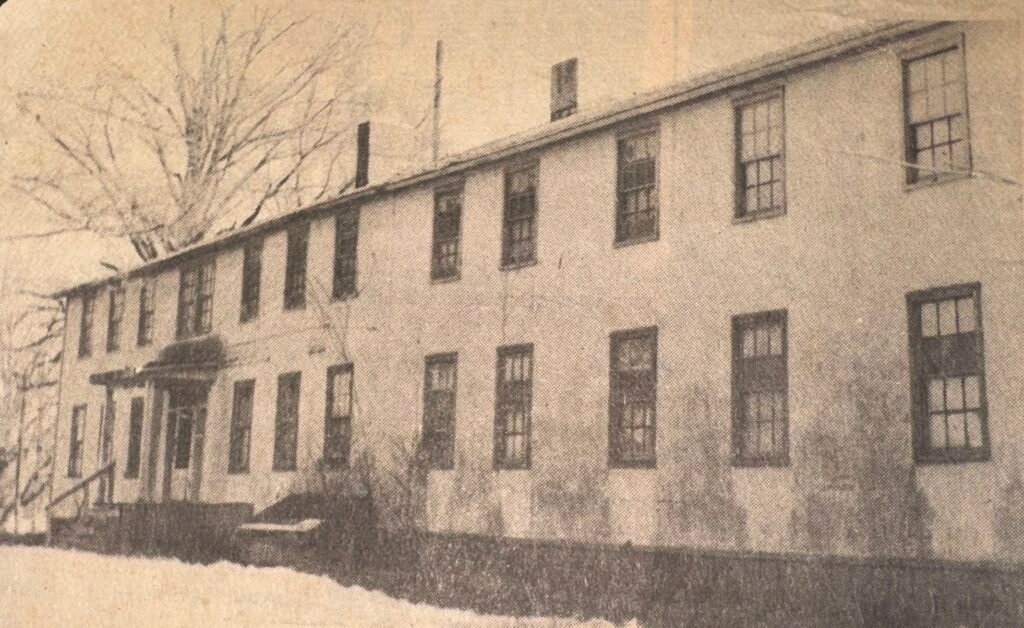
On Highway 70, there was a cotton gin, a dry cleaning shop, four gas stations all with mechanics on duty, two grocery stores, a dry goods store, a Western auto store, a trolley car café, a blacksmith shop, a skating rink and a funeral home.
“I can name the owner or operator of every business mentioned above,” she said.
She recalled that the post office was the social center of town during the war years of 1941 to 1945, where young and old alike gathered each evening after the trains brought in the daily mail.
“Small town fellowship is not easily understood by city folks,” she said.
Boyd also remembered the hobos of the Depression era, who would walk all the way to the south end of town looking for work or a meal.
“My Memea would give them leftovers — usually cold biscuits with ham or sausage,” she said. “We had no fear of them. They were just trying to make their way in hard times.”
She shared a memory of riding along with her grandmother to pay bills on payday. Railroad employees were paid on the first and 15th of each month. They always stopped at the Ralph Page grocery on Highway 70, just a block from their house.
“When paying our bills, Ralph would always give me a piece of candy or a stick of gum,” Boyd said. “Such good memories we were making, but never realized at the time how exciting it was to grow up in a small railroad town that had so much to offer.”
During World War Two, she said, the depot became a gathering place of a different kind.
“The teenage girls would meet the evening trains to see the GIs coming and going from their bases,” Boyd said. “They would hang out the windows, handing out and receiving addresses.”
She also recalled the moment the war began for her personally, while walking home from the Ritz Theater on a Sunday afternoon, December 7, 1941.
“A friend told me the [Japanese] had bombed Pearl Harbor,” she said. “I was 12 years old and had no earthly idea what that meant. Innocence is bliss.”
The following morning, her seventh grade teacher, Mrs. Myrtle Wright, brought a radio to school so the class could hear President Franklin Delano Roosevelt declare war on Japan.
Boyd also shared a lighter memory from her senior year. The class of 1947 was trying to raise money for a senior trip to New Orleans when they struck a deal with two local businessmen — Ed Womack, who operated the dry goods store, and Pat Wheeling, who ran the Gulf service station.
Two or three seniors would ride along on trips to surrounding towns to sell chances on a new 1947 Frazer automobile, earning a dollar per ticket sold.
“I was fortunate enough to go on one of the trips and it was a lot of fun,” Boyd said. “The money, along with our other projects, made it possible for us to realize our dream of going to New Orleans. Quite a feat in 1947.”
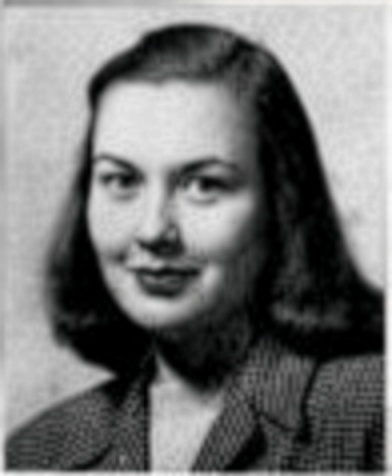
In 1947, Boyd was no stranger to the spotlight. She was Football Queen, a cheerleader, voted Best All-Around Girl, and was Advertising Manager of both the school annual and the student newspaper, the Tiger. Her senior quote read: “A tiger heart wrapped in a woman’s hide.”
End of an Era.
The decline of the railroad in the 1950s, she said, took a heavy toll on a town that had been built around it.
“With the demise of the railroad, the town’s economy took a tremendous blow,” she said. “Later, when H.I.S. closed its doors, the great little town that was born and flourished for 100 years or so practically died and, like a vapor, disappeared.”
“Bruceton is now a lovely, nice, quiet, serene bedroom community with many of its citizens having no knowledge of its former glory,” Boyd said. “Such a shame to those that remember.”
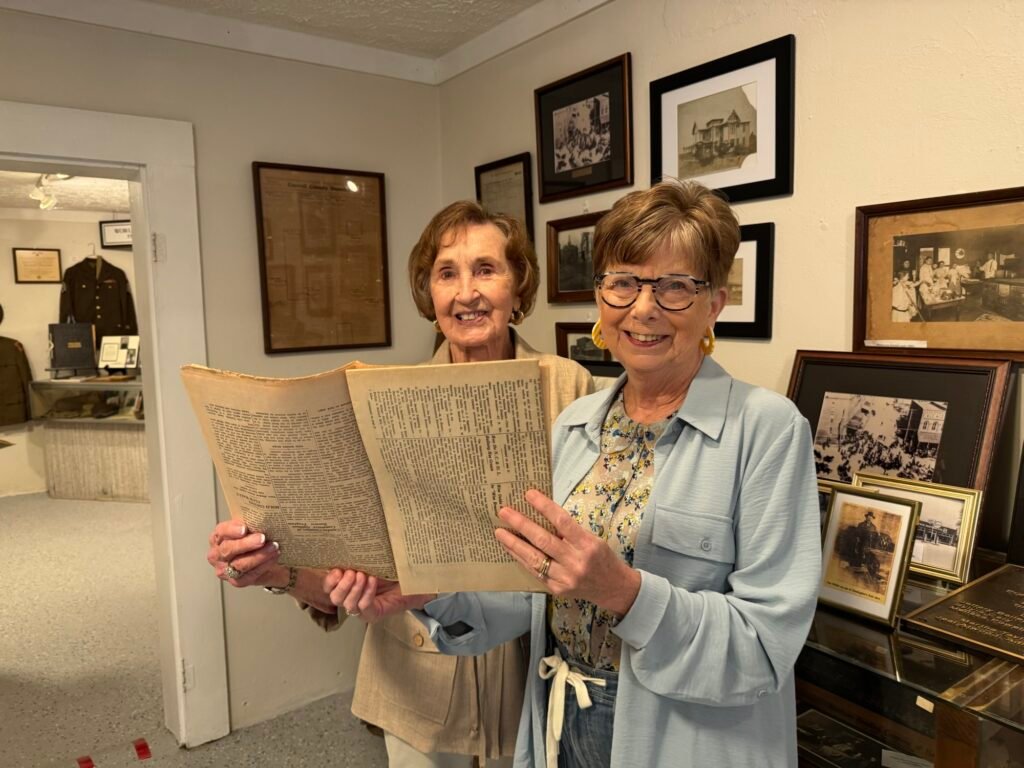
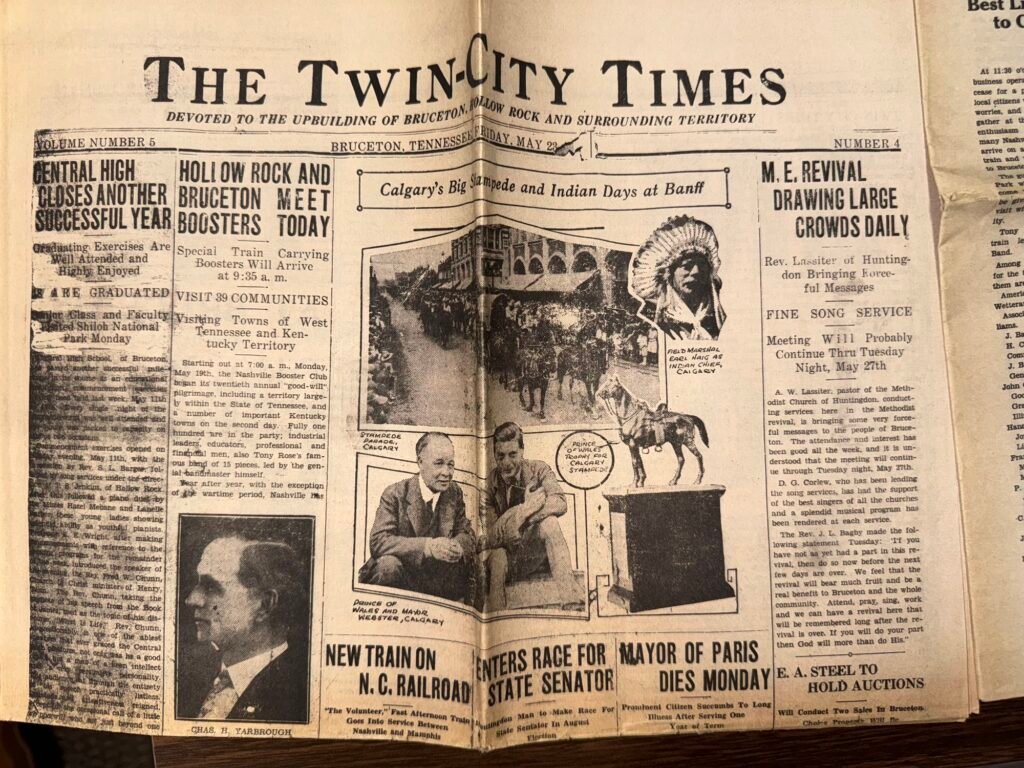
Boyd donated two copies of the Twin City Times, a Bruceton newspaper that ran from 1925 to 1936. She had acquired the two copies at Central High School’s first alumni day in 1986.
As for Samuel DeVille, his great-great-aunt’s wish seemed simple enough.
“I hope he can remember me,” she said.
If Wednesday morning was any indication, he won’t be the only one.

Great job! I was born in 1944, and enjoyed life in Bruceton!