
HUNTINGDON, Tenn. — Carroll County Trustee Paula Bolen had a message for the Carroll County Finance Ways and Means Committee at last week’s budget hearings on April 9.
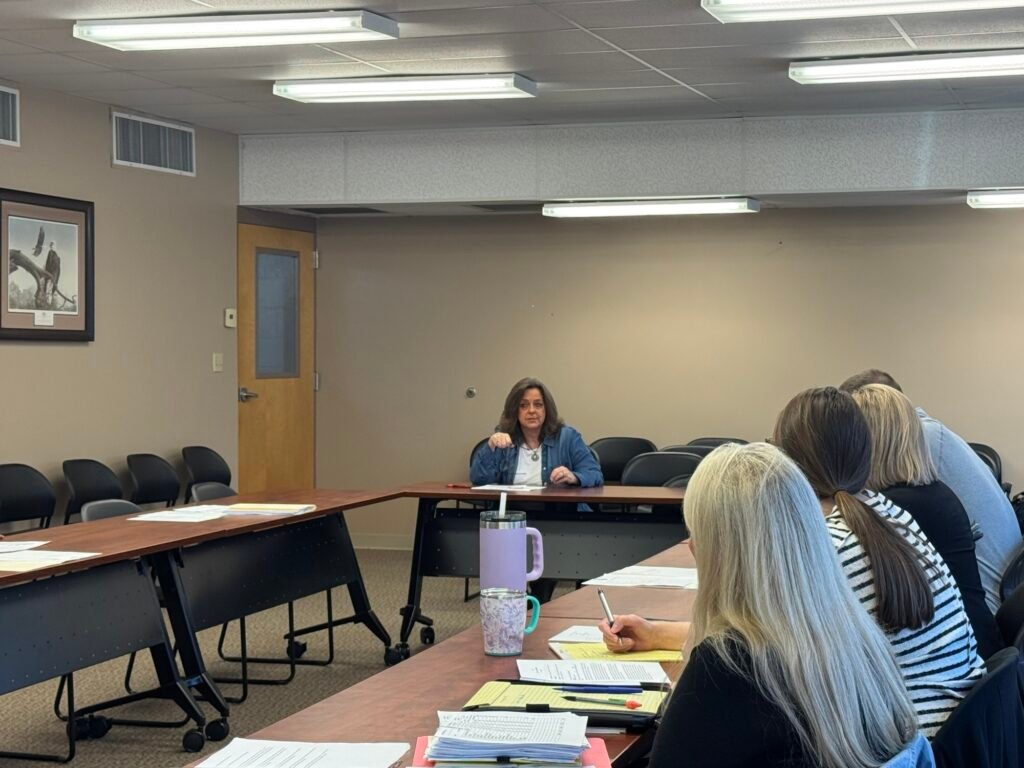
She told committee members that the county has more money than its budget reflects, and it should consider using some of it to help employees through a potentially uncomfortable payroll transition, if the commission approves the new payroll structure.
“Good employees are very, very important,” Bolen said. “Bottom line is money. They’ll go somewhere else eventually if they feel like they’re not being treated right. And I’ve been through the hiring process, and I don’t want to go through it again.”
That warning landed in the middle of an all-day budget hearing where department after department told the committee the same thing in different ways: retaining qualified people is a problem, and pay is part of it.
The committee held every department to the previously approved 3% increase, with no exceptions.
Tonight, the Carroll County Commission meets at 7 p.m. at the Carroll County Office Complex, 625 High St. in Huntingdon, where commissioners will vote on Resolution 4-07-2026 — a payroll policy overhaul that takes effect July 1 and includes no provision to ease the financial strain employees may face during the transition.
What Bolen Told the Committee.
Bolen stepped outside her own budget presentation at the April 9 hearing to make a case she said the numbers supported.
She pointed out that the county holds approximately $1.5 million at Apex Bank, where interest rates have recently risen to 3.75%, and that Carroll Bank has moved to 3.8% on funds coming due.
After a strong collections year, she said the county’s operating account holds nearly $3 million — funds that were not needed to cover recent large purchases — and that interest income alone is running about $18,000 per month.
“That is money that we’re not figuring in on the budget,” Bolen said. “If we can work with something that will help smooth that [transition] out. It’s not [the employees’] fault this happened. It’s not the county’s fault either. But to take the burden off of them, if that plays a part.”
A Day of Difficult Conversations.
Bolen’s comments came on a day when the theme of employee retention ran through several budget presentations.
Carroll County Library Director Erin Crockett and Assistant Director Denise Coleman made a formal case for salary increases during their budget presentation that would bring longtime library staff in line with comparable county positions.
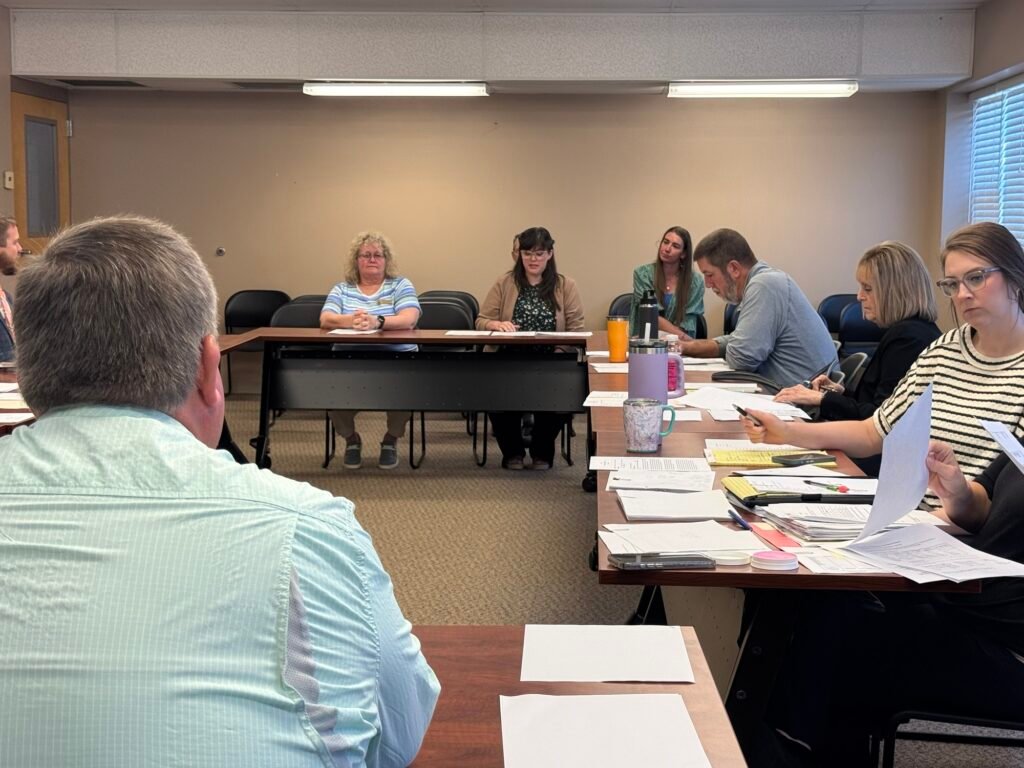
Their argument centered on inequity.
Library staff members are not paid deputy rates like employees in other departments.
A new hire at the county deputy pay scale makes more than library staff members who had served for years, some nearly a decade.
Library board chair, Robin Hatler told the committee, “The last thing we want to do is lose them and have to start over with training and building somebody back up to the level of skill.”
Finance Committee Chair Darrell Ridgely warned other members that maintenance of effort rules applied to the library, and whatever level the county funded this year, it could never go lower.
He said that the library had made similar requests in prior years, and that past increases had been followed by new asks the following budget cycle.
“They ought to take the 3% and be thankful they got it,” he said.
The committee plans to only move forward with the approved 3% raise for the library.
For the third year in a row, Circuit Court Clerk Sarah Bradberry told the committee her office has struggled with chronic turnover.
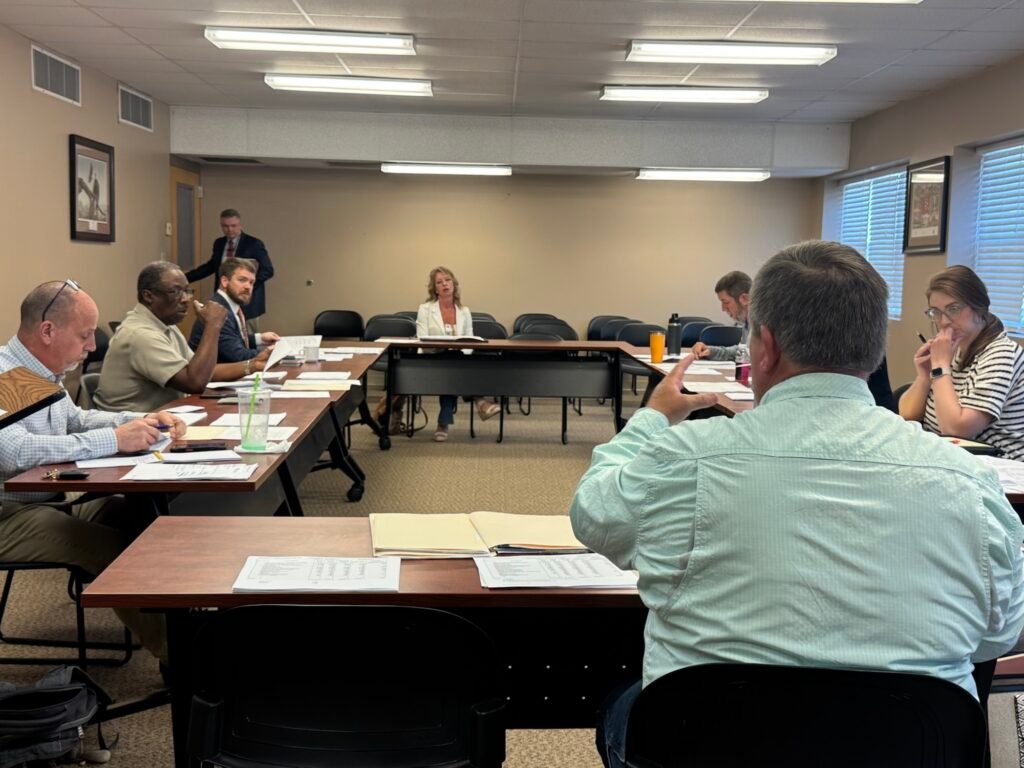
She explained a problem in which her office trains clerks up to a high level of competency and then loses them, often to the district attorney’s office, which can pay more.
She asked for salary increases that would bring her clerks closer to what the work demands.
The committee debated at length how much, if anything, to offer above the standard increase.
Committee member John Austin ultimately argued that a partial concession would only delay the same conversation.
“She’s going to be in here next year asking y’all for more money, just like she has the last two years,” Austin said.
Ridgely acknowledged the situation carries a layer of complexity, noting that Bradberry is married to Circuit Court Judge Brent Bradberry, whose court her office serves.
He also acknowledged the challenge of balancing fair compensation against budget discipline.
“This is like stretching a rubber band,” he said. “We’ve got to stretch it just enough to not pop.”
The committee approved 3% for the circuit clerk’s office.
The Payroll Structure Vote.
The Resolution that commissioners will consider tonight has been in the works since March, when the Finance Ways and Means Committee first approved the concept of moving to a pay-for-days-worked structure.
The change ends a longstanding practice of paying employees in advance of hours worked.
Under the new policy, employees would be paid on a semi-monthly schedule of 24 payrolls per year, with compensation based on actual days worked. The resolution also standardizes how holiday pay is handled across all county departments. Holidays must be paid in the period they occur and can no longer be banked or carried forward.
That last provision carries particular weight for staff at the sheriff’s department.
Unlike other county departments, including the fire department and highway department, which have irregular or on-call hours, the sheriff’s office and jail operate around the clock, every day of the year without exception.
Deputies, jailers, and dispatch staff work every holiday, meaning the ability to bank holidays has functionally served as an additional benefit for providing that uninterrupted service.
Commissioner John Austin argued at the March 5 Finance Committee meeting that the practice created an unequal privilege.
“We have to be careful as a county to allow a department a privilege that we don’t offer other departments,” Austin said. “Holidays are set up to be paid and taken the day of the holiday.”
The transition also creates a gap in pay.
Employees will receive their last check under the current system on June 30.
Their first check under the new system will not arrive until July 24, several weeks later, over the Fourth of July holiday.
Commissioner Dan Willman said at the April 6 resolutions committee meeting that he was already hearing from employees.
“I’m getting some calls. People are upset because they think they’re going to lose pay,” Willman said.
County Mayor Joseph Butler acknowledged the concern but noted that annual pay remains the same — employees are not losing money, only experiencing a delay.
“On a fundamental level, we know that a lot of people live paycheck to paycheck, so any lag period will definitely hurt,” Butler said.
Willman suggested paying the first period normally and recouping the difference in small amounts spread across the rest of the year.
“You’re talking probably $10 to $15 or $20 a paycheck, which is a lot easier to take than a whole week,” he said.
This is the issue that Bolen sought to address in her remarks to the finance committee on Thursday.
Mayor Butler noted the resolution can still be amended or voted down by the full commission.
The Department of Labor requires 90 days’ notice before a payroll change takes effect, which is part of the reason commissioners are being asked to act now ahead of the July 1 target date.
Formal notification letters to employees are expected to follow a commission vote.
The meeting begins at 7 p.m. at 625 High St. in Huntingdon.
