

A country ham hung in an old smokehouse near Pond Branch Road in rural Carroll County for decades, curing and waiting. Waiting for a young soldier to finally return home from war.
It was never eaten.
Carroll County Technical Center (CCTC) Principal Joe Norval stood before the Huntingdon Historical Society on the cold and rainy Wednesday morning, January 21.
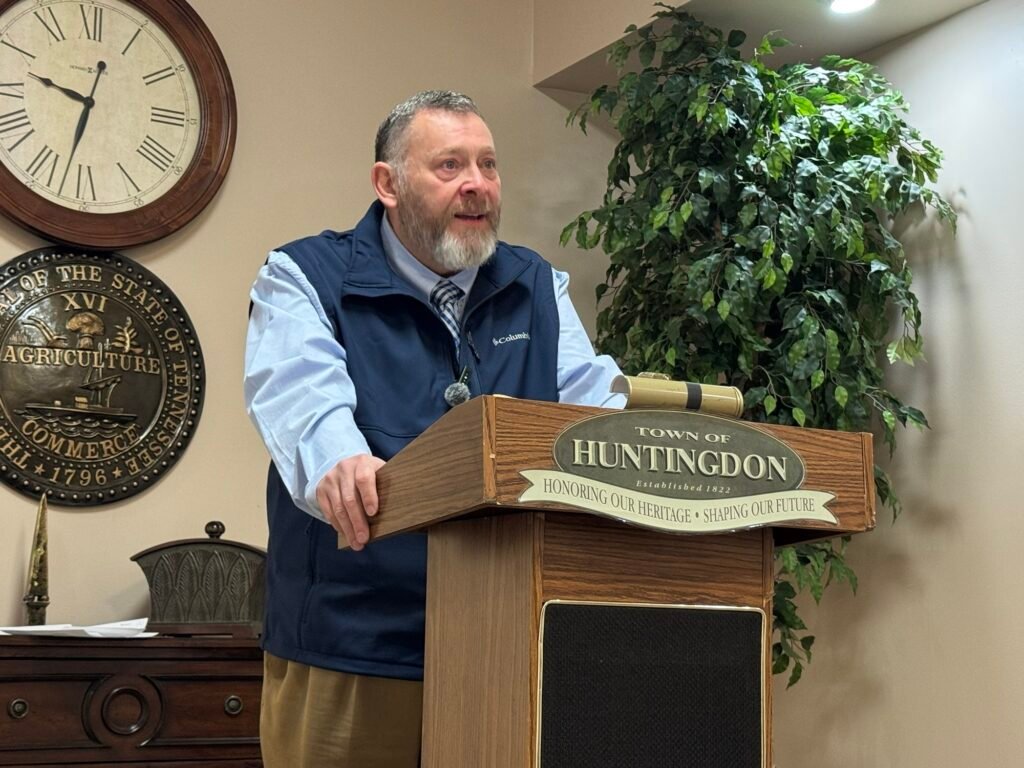
His voice was catching before he even started.
“I said I wasn’t going to get emotional,” he told the room as he shuffled his notes on the podium. “I’ve learned so much about this man over the last two months. I already knew the story a long time ago, but when I started to dig deep, he’s such a real person.”
He paused.
“The last five letters in the word ‘history’ – story. That’s what history is,” he said. “It’s storytelling. Dates have no meaning. They have no soul. A date doesn’t tell you what was felt, what was risked, or what was lost.”
Norval told the story of Private William Bernice Clark, his sacrifice, the hope his family carried, and the remarkable way in which he’ll be remembered.
Define Sacrifice
“Think of your definition of ‘sacrifice’,” Norval told the audience.
The room hung silent.
“Now, a soldier goes off to war. Sometimes they don’t come home,” he said.
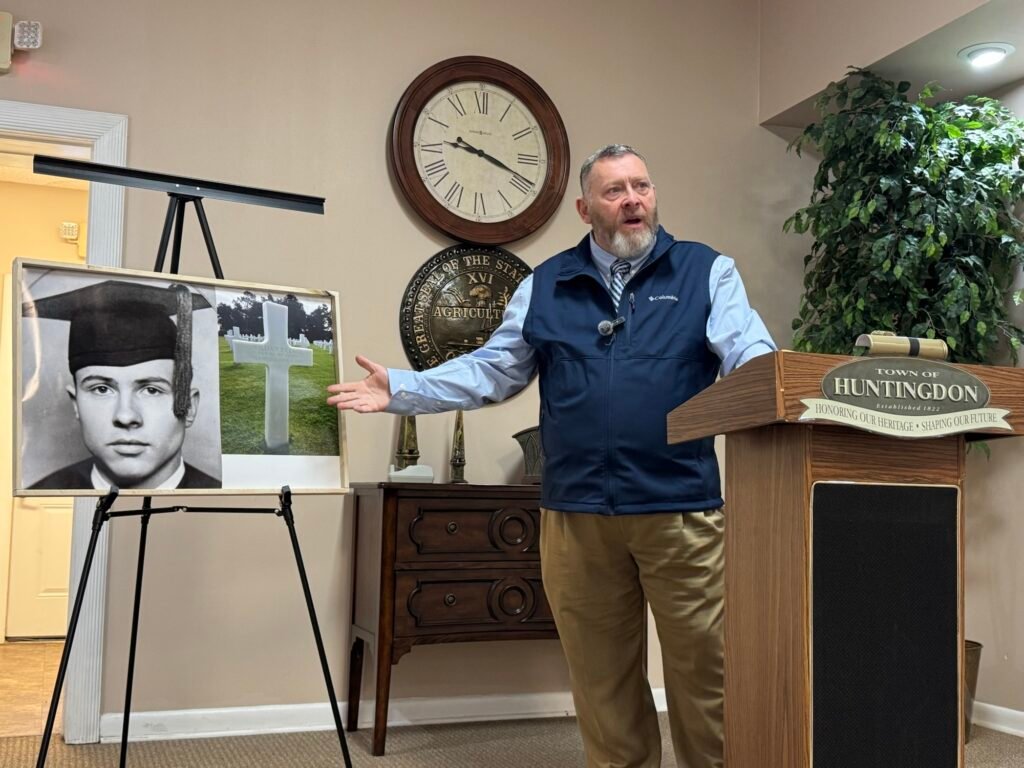
William Bernice Clark was born on January 24, 1924 as the only son to William Clarence Clark and Alvada Smothers. The family lived near Pond Branch Road, where Smothers Road meets McKee Levee. The land had been with the family since the 1850s, and still is to this day.
Norval pointed at William’s high school graduation portrait. He graduated from Hollow Rock-Bruceton Central High School in 1942.
After graduation, he joined the U.S. Army. Or he was drafted. No one knows for sure. Either way, he was assigned to Company H, 2nd Battalion, 116th Infantry Regiment of the 29th Infantry Division.
“The blue and gray division,” Norval explained. “Stonewall Jackson’s Brigade.”
By early 1944, Private Clark was in England. A family member had shared with Norval a letter William wrote to his aunt in Memphis, dated January 1944.
“He talked about how they were treating him in England. He talked about how good the food was. He said they were feeding him well. He was excited,” Norval said with enthusiasm. “The USO entertains us. I’m having a good time. But I want to get back to Memphis for some Memphis barbecue.”
The room chuckled softly.
“And he needed hangers for all the new clothes he had,” Norval added.
There was another letter, written a week or two before D-Day, postmarked the day before the invasion.
“Something big is coming,” Private Clark had written.
“The Mouth of an Angry Dragon”
Norval’s voice grew as he painted the scene of that day.
“On June 6, 1944, he was in the second wave landing on Easy Red [section of] Omaha Beach, in Normandy, France,” Norval said.
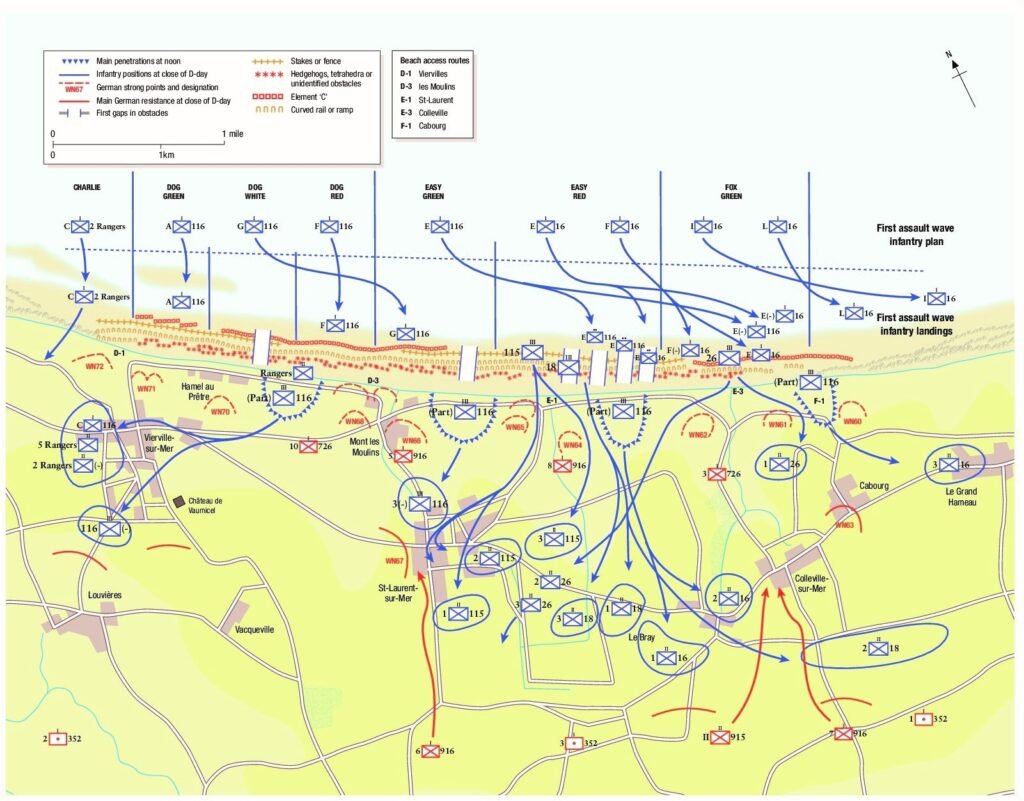
He explained that Private Clark’s unit was destined for the section known as Easy Green.
“The best place to be if there ever was one on Omaha Beach,” he said.
But in the fog of war, caused by the smoke and the bombs, the landing craft drifted.
“He didn’t make it to Easy Green,” Norval said. “He drifted into Easy Red.”
His voice filled the conference room.
“They had walked into the mouth of an angry dragon,” he said.
Company H landed right between two German fortified positions: “Widerstandsnester (bunkers) 64 and 65”.
The invasion plan had failed. Air support bombs missed. Rockets fell short. The beach was untouched, offering soldiers no cover when they landed on shore.
Leadership also received bad intelligence about the enemy.
“They thought they were facing volunteers and a poor German defense,” Norval said. “They were not. They were fighting some of the best soldiers that Germany had to offer.”
“They landed smack dab between 64 and 65,” Norval repeated. “and they had to [run into] that murderous crossfire.”
His speech got faster.
“They were under machine gun fire. They were under mortar fire. They were under well-aimed small arms fire, and they were under the an enfilading fire of German 88 artillary rounds!” he exclaimed.
“Witnesses report from this area that in the surf on Omaha Beach at Easy Red, the water ran completely blood red.” Norval added. “Pilots could see it from the air.”
He described with intensity, the MG-42 machine gun that German soldiers used.
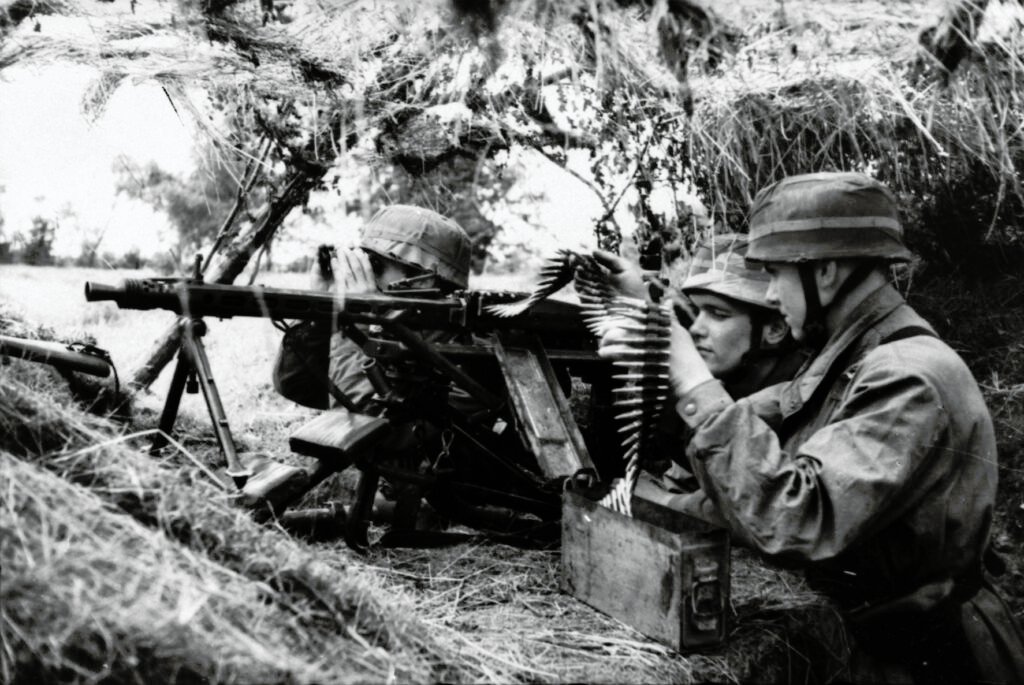
“Hitler’s Buzzsaw! Hitler’s typewriter! Probably the greatest machine gun ever created on the planet,” he said. “Even today, we can’t match the firepower of what that weapon did.”
Of the 3,100 soldiers from the 116th who landed that day, 800 became casualties.
Norval shared what German gunner Franz Gockel said about that morning: “We were killing them (American soldiers), and they just kept coming. They just kept coming.”
Private William Bernice Clark was killed on Easy Red Beach, June 6, 1944.
“You know, he died before he possibly ever had his first beer,” Norval said. “Possibly before he ever had his first kiss from a girl.”
He then explained that the German gunner Gockel was also 20 years old. The same age as Private Clark.
“Those were kids fighting kids,” Norval said in disbelief.
The Ham That Waited
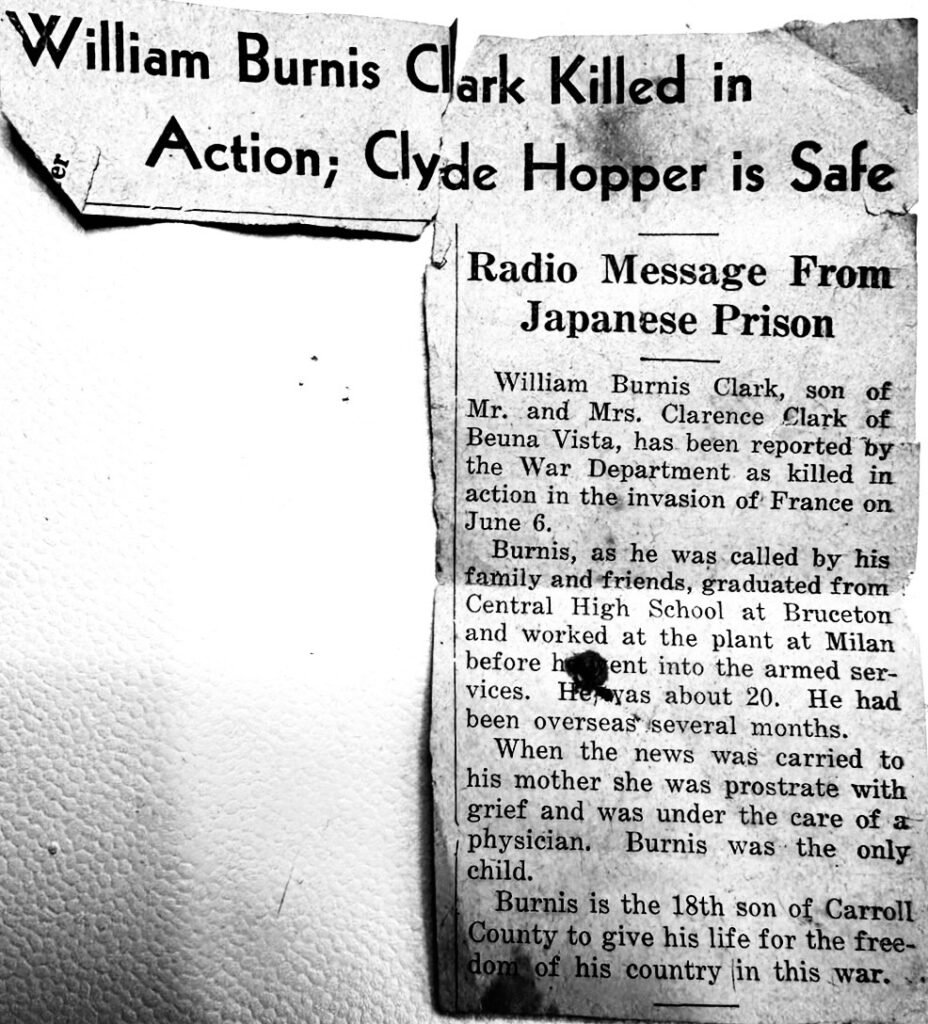
Back in Carroll County, the telegram arrived.
Clark’s mother was so devastated at the news that she needed medical attention. Doctors came by the house to treat her.
William was an only child.
“They never got a funeral,” Norval said. “They always thought that he was lost. One day he was going to come home. They never accepted the fact.”
In their smokehouse, a country ham hung, cured and ready for when William would one day walk back through the door.
Norval explained how family members in later generations, through the 1960s and 1970s, would ask about a photograph of the young soldier hanging on the wall.
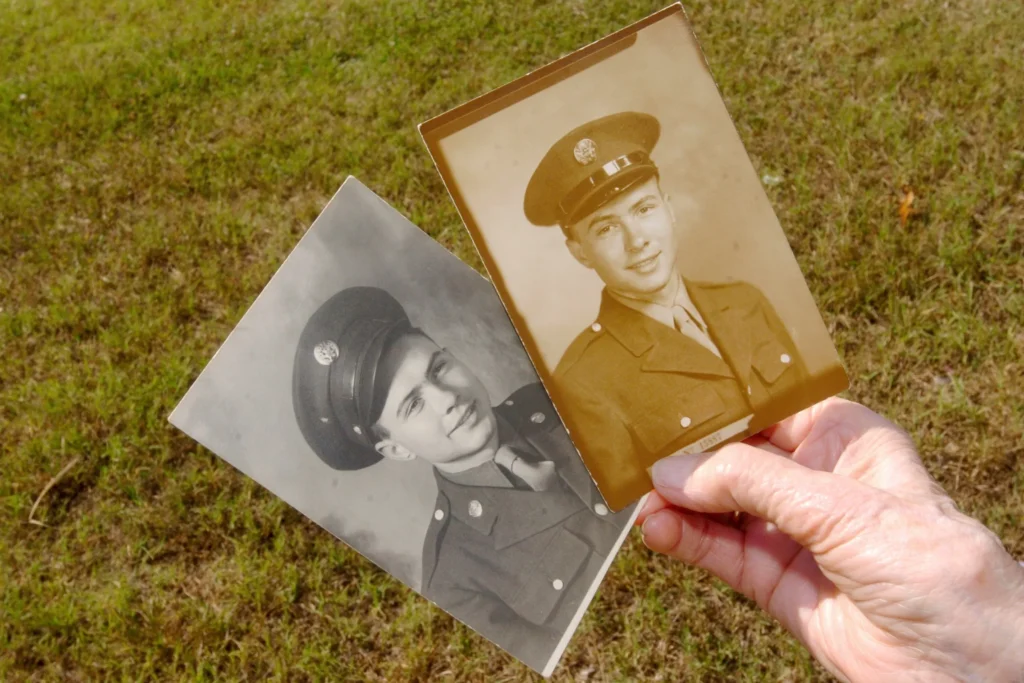
“’Who is this guy?’ they would ask. And his mother would say, ‘That’s my son. He’s lost over in France. He hasn’t made it home yet.’”
That was decades after the war ended.
“Both of them passed on,” Norval said, “and that country ham stayed out there for years and years.”
Buried in the Sand
“A lot of people would like to think that that’s where the story ends,” Norval said.
He explained that in 2002, an English researcher, walking Omaha Beach, found something buried in the sand beneath the cliffs: a dog tag.
An American soldier’s dog tag.
“He took it back to England,” Norval recounted, “but kept saying, ‘I do not deserve to hold this. I gotta get this to the United States.’”
That tag belonged to Private William Burnice Clark.
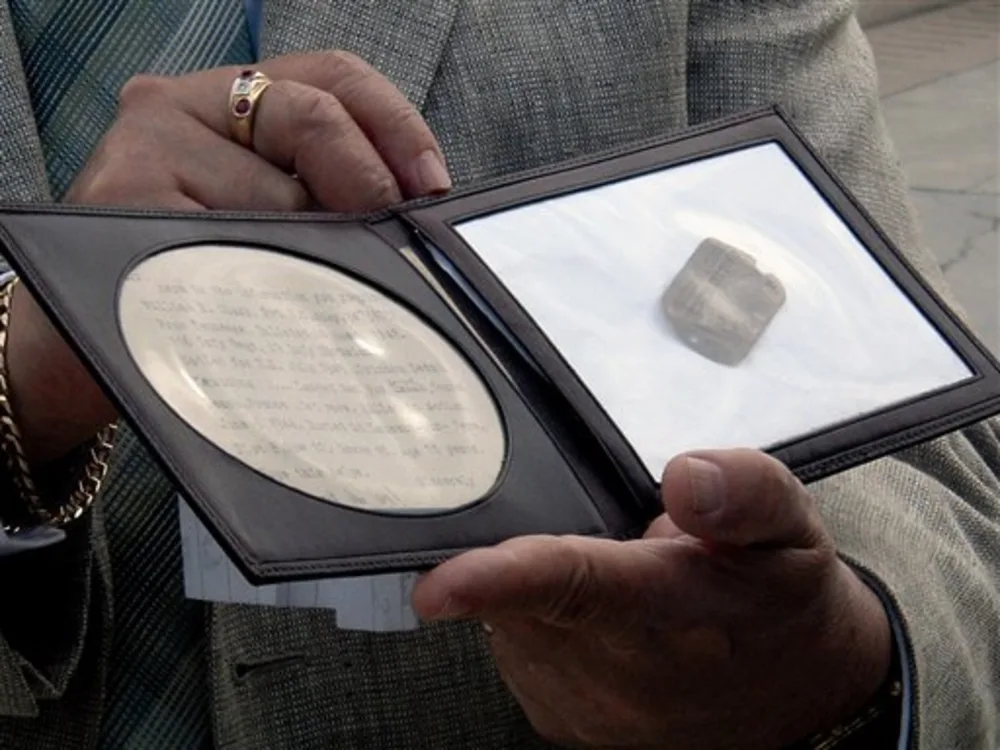
“[It] remained buried in the sand since the invasion,” Norval said. “A silent witness to the sacrifice on June 6th.”
The tag eventually made its way to a collector in New Jersey named Bill Santoro.
Santoro, also believing he didn’t deserve to hold on to the tag, donated it to the National D-Day Foundation in Bedford, Virginia.
On the 63rd anniversary of D-Day in 2007, Clark’s dog tag was presented to his first cousin, Lota Park in a ceremony held at Thomas Park in Huntingdon. Park was the oldest living relative of Private Clark.
The artifact came home.
Story is Just Beginning
In the audience during Norval’s presentation was Lota Park’s daughter Phyllis Taylor, and Buddy Smothers, who is a distant cousin to Private Clark.
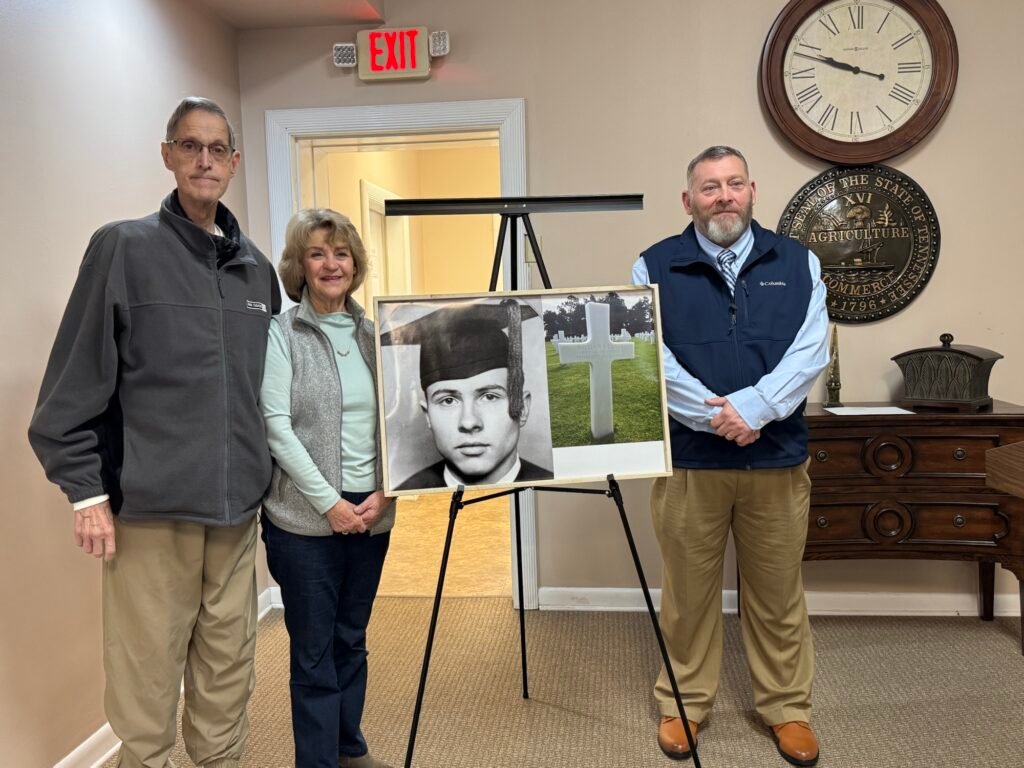
The family, Norval explained, wants the dog tag to go to the National World War II Museum in New Orleans.
Another family member of William Clark’s, named Mary Elizabeth Gilmore McCord, had been working with the museum’s curator.
After hearing the story, the curator reportedly said, “We’ve got to get that dog tag here!”
The dog tag itself is in the possession of another of Private Clark’s cousins, Clark Smothers of Richland, Michigan. He is going to pass the tag along to McCord, who will then donate it to New Orleans.
“Once secured by the World War II Museum,” Norval said, “Private William Bernice Clark will begin his final mission. People from all over the world will learn his story, to know the sacrifice that he made, and also the thousands upon thousands of his fellow brothers on the beaches of Normandy and all over the world on behalf of our great nation.”
He scanned the room as his eyes welled.
“His story is no different than thousands of soldiers across the country during the war,” Norval said. “But his story is not ending. His story is just beginning.”
Norval asked that each person in attendance tell Clark’s story to ten people.
“Let’s keep him alive in Carroll County,” he said.
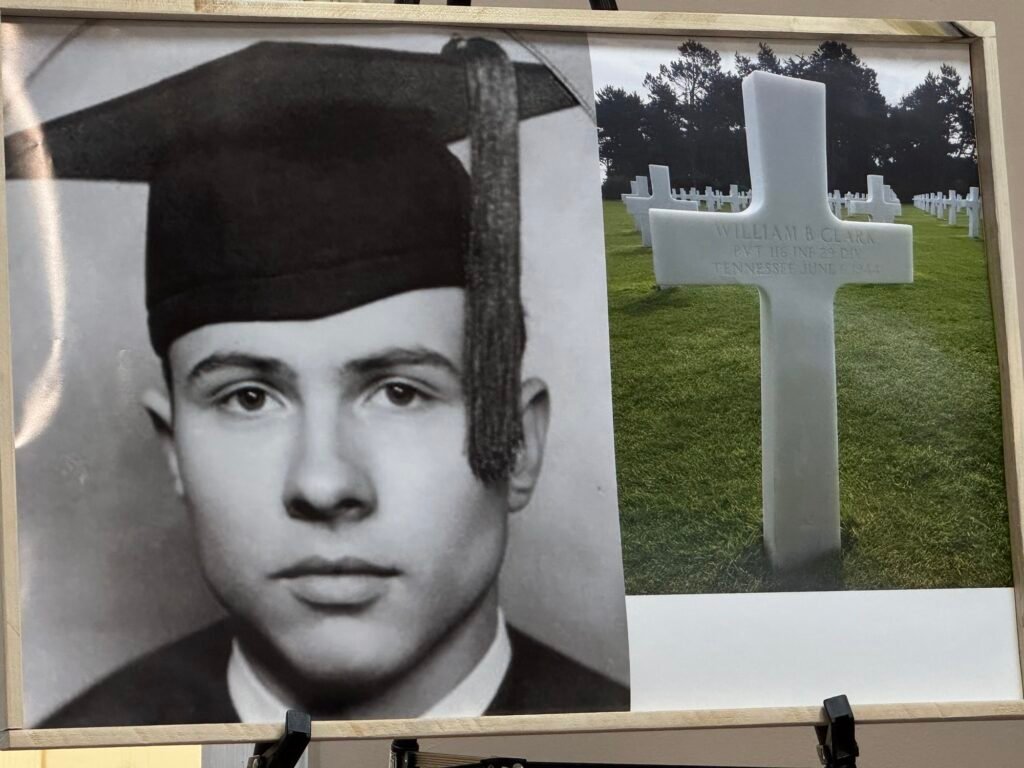
Today, Private William Bernice Clark rests at the Normandy American Cemetery at Colleville-sur-Mer, under one of 9,388 white marble headstones overlooking the beaches. His reads: “William B. Clark, Tennessee, June 6, 1944.”
His dog tag, once buried in sand for 58 years, will soon rest in a museum where millions will learn his story. Millions of strangers will learn about a 20-year-old kid from Buena Vista who never got his Memphis barbecue, whose parents hung a country ham that no one ever got to enjoy, and who was one of the American soldiers that bravely stormed the beaches of Normandy, even as the surf ran red.
Private William Bernice Clark’s final mission has begun.
