
HUNTINGDON, Tenn. — Tech companies may not yet be interested in building a data center in Huntingdon, but the Planning Commission doesn’t want to wait until it’s too late to set zoning rules.
The Commission voted unanimously Monday to recommend an ordinance that would create zoning regulations for data centers, defining what qualifies as one and laying out the requirements they would have to meet.
Mayor Chad Edwards supported the push to get ahead of it because of what a data center would and would not bring to Huntingdon.
“I don’t want to knock a factory out — a company that’s going to have 100 jobs or 200 jobs,” he said. “I’d rather put a restraint on this and hope for a factory that’s going to employ people.”
It now heads to the Huntingdon Town Council, where it must pass two readings and a public hearing before it becomes law.
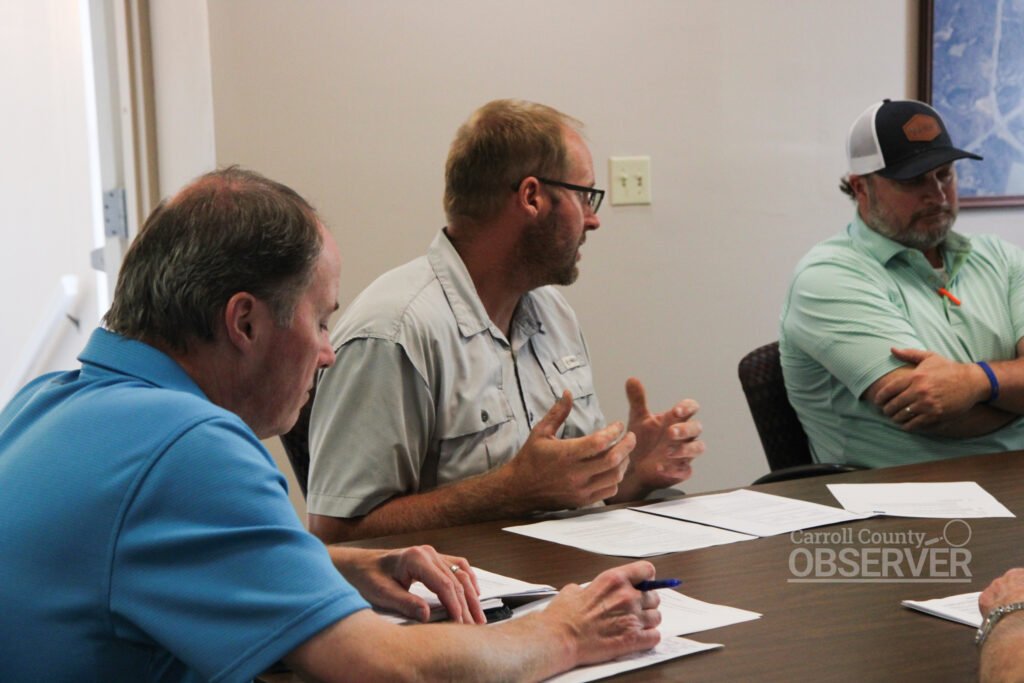
Community Planner Donny Bunton wrote the ordinance.
“I’m suggesting to the communities I work with that they adopt something into their zoning to get ahead of the data center,” he told the Commission. “My proposal would put these into a general industrial district, and it would set minimum lot sizes: five acres for the small data centers, 20 acres for the large data centers.”
The ordinance also sets minimum distance requirements between data centers and nearby residences, keeping small data centers at least 500 feet from a home or residential zoning district and larger facilities at least 1,000 feet.
It lays out land management standards for the buffer areas in between, including preservation of existing vegetation, evergreen screening, and native tree and shrub plantings.
Lastly, the ordinance sets additional guidelines covering maximum noise levels, required noise and utility impact studies, and site plan review by the Planning Commission before any building permit is issued.
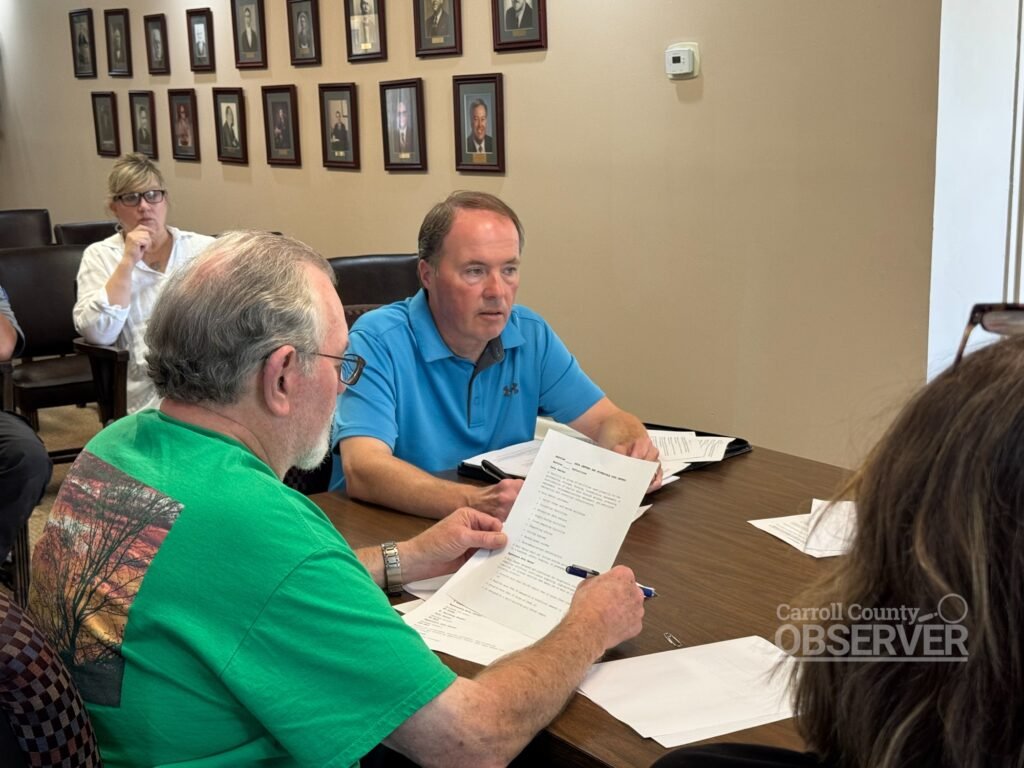
Bunton said the push is coming from planners and city managers across the region, many of whom have watched data centers move into communities with no zoning language built to handle them.
He used Humboldt as an example.
They had no such regulations on the books when a company proposed a cryptocurrency mine there in April. Because the site sat in an industrial district and met the district’s setback requirements, it had to be treated like any other manufacturing use and was approved.
“It was an approved location,” Bunton said. “But I think the thought is from most managers and community leaders that some type of specific data center regulation should be looked at.”
Bunton said he was not trying to write the town out of the option of data centers entirely.
“You can’t really just zone something out because it’s a legally permitted use,” he said. “You’ve got to find somewhere for it to go.”
Edwards said water and electrical capacity may end up being the bigger factor in whether a data center could locate in Huntingdon at all. He said the facilities’ demand for both could cut either way for the town, straining its systems or helping fund improvements to them.
Commission members also mentioned how much the buffer and acreage requirements would narrow the town’s options.
Edwards said much of the land near Huntingdon’s substations, generally considered the most attractive sites for data centers, would likely be ruled out under the ordinance’s setback rules.
The property that’s available at Industrial Park North runs closer to 10 or 12 acres, short of the 20-acre minimum for a large data center under the ordinance.
Edwards made the motion to adopt the ordinance as drafted. It passed without objection.
Huntingdon Town Council will review the ordinance at their next meeting on Tuesday, August 25.

Comments 1